Tony Sieber creates ambient, guitar-driven downtempo that feels warm, spacious, and quietly cinematic—and Because We Are is his first full statement as part of the Sine Music family.
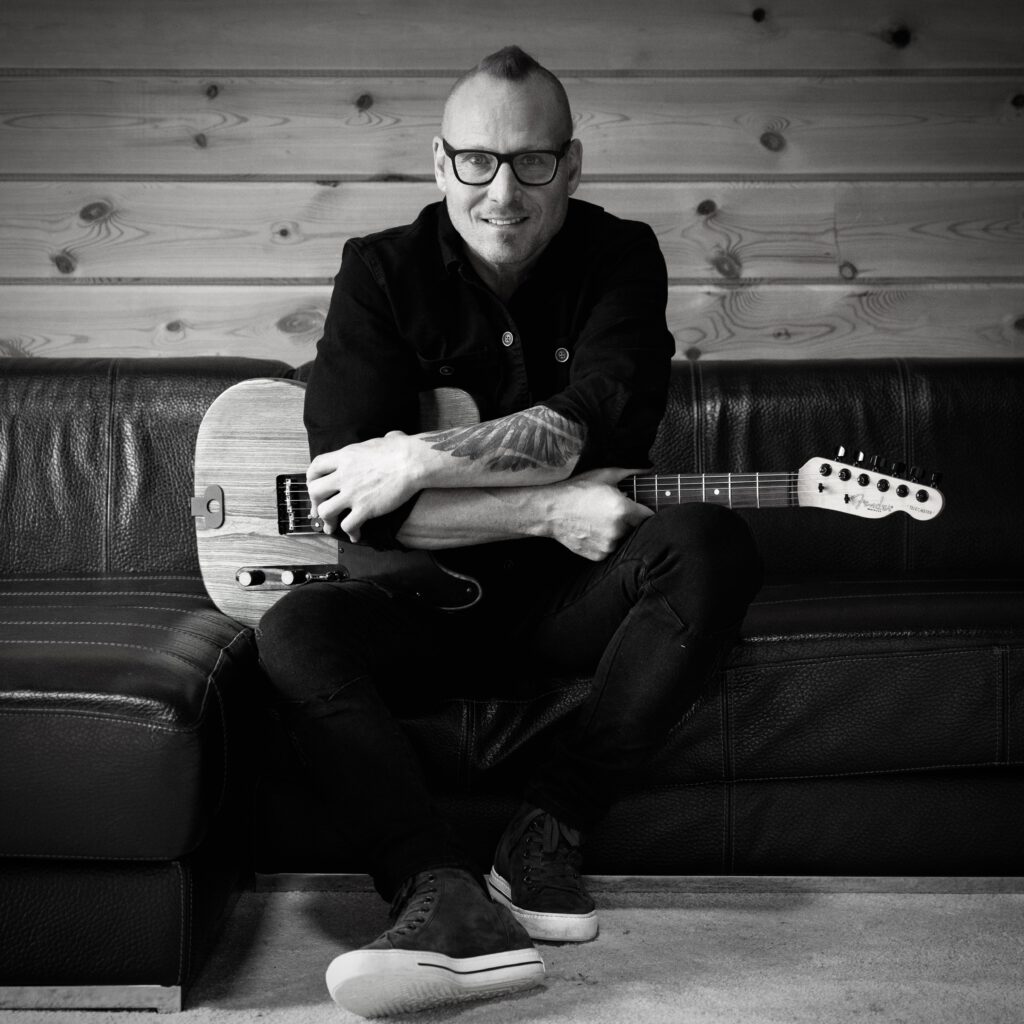
The Interview
Introduction
Q: For those who don’t know you yet: how would you describe yourself as an artist today—especially the way you combine guitar and synthetic elements?
Tony: Even in my youth, I listened to a lot of Pink Floyd in addition to the usual rock music. The way they combined atmospheric electronic elements with David Gilmour’s brilliant guitar playing always appealed to me. However, I’m not someone who dwells on the past. I’m always curious about new elements and techniques in the sound palette, and that’s how I’ve continued to develop my style. I combine modern hip-hop lo-fi beats with guitar sounds and synths.
Q: You spent many years as a rock guitarist before moving into more “spherical” sound worlds. Was there a defining moment when you knew you wanted to shift into this more atmospheric direction?
Tony: Yes, there definitely was. I was a metal musician for a long time and was inspired by neoclassical guitarists such as Yngwie Malmsteen, and later by Joe Satriani’s style. I brought that into the bands I played in at the time. But I also listened to atmospheric music and blues. Over the years, this music became too rough for me, and I realized I no longer felt comfortable with that energy. This led me, step by step, to the music I make today.
Latest Work
Q: Please introduce Because We Are in your own words. What is this album to you—and how would you like listeners to approach it (headphones, background focus music, a quiet evening listen, etc.)?
Tony: ‘Because We Are’ is my first album on the Sine Music label. Before that, I released several albums composed as soundtracks for multimedia shows, often including ethnic elements that fit each show. I also toured live with these shows, which worked very well at the time. Then came a long period where I produced a lot of music for artists, films, and large companies. After a long break, I released the album ‘Ambient Guitar Tales’ on a small label in 2023, which was very well received worldwide. I had been following the Sine Music label for some time and thought many of the artists were really great. So I decided to sign with Sine Music for the new songs on ‘Because We Are,’ which was a very cool thing for me. ‘Because We Are’ is a consistent further development of my style. I was more focused on a lo-fi approach and tried to combine very contemporary sounds with my guitar playing. A beautiful, deep atmosphere is important to me. The music should carry you away from everyday life for a moment.
Q: Because We Are is your first album as part of the Sine Music family—and also your 13th solo album. How do you personally place this release in your overall evolution? What makes it feel like “the right album at the right time”?
Tony: Yes, definitely. I was very happy to be accepted into the Sine Music family. SINE (Thomas Hauser) and you (Thomas Lemmer) have certainly influenced my style.
Q: There’s a clear atmosphere throughout this record—warm textures, subtle beats, and melodic guitar lines. What emotional or conceptual thread did you keep returning to while making Because We Are?
Tony: There isn’t really a clear concept. It was important to me to be contemporary and not sound like I did 10 years ago. I always find it exciting to explore new music and hear new ideas, and I like to bring that into my sound. Ultimately, the sound that comes out reflects what I personally like and choose to implement.
Creative Approach
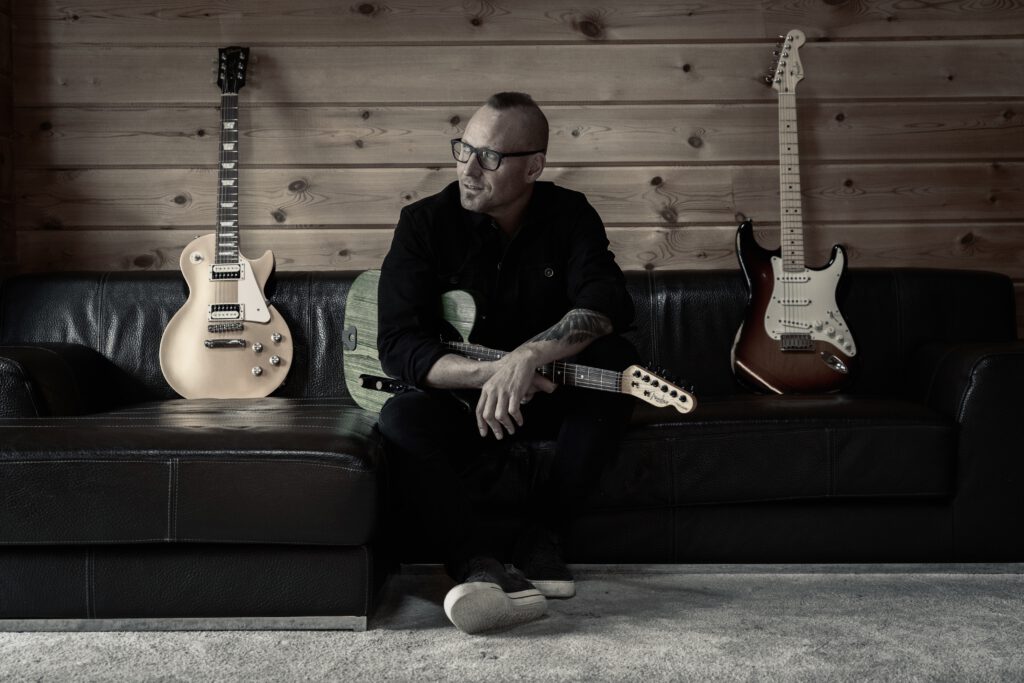
Q: How did you approach the creative process for Because We Are—composition, sound design, production? And in what ways was it different from your earlier work (including your rock years)?
Tony: As I said, I always keep my ears open for what’s new in the music world. It inspires me. I’m always on the lookout for something new. Of course, I can listen to an old song and enjoy it—playing a classic again can be nice and bring back memories. But I get bored very quickly. Life has so many facets to offer. I want more of it.
Q: You had a longer creative break (around seven years). Was there a specific moment during the making of this album where you felt that joy fully “came back”—or where things almost didn’t come together?
Tony: Yes, I took a long break. I had produced a lot of music; I had my own production company, along with several business partners and employees. It became a music machine, which satisfied me less and less over time. You become numb. I lost interest in music. On top of that, there were difficult personal issues. I had to reorient myself and give myself time. I wasn’t sure if I would ever make music again. Then I started playing guitar regularly again, which I hadn’t done very often with all the business responsibilities before. I had played many hours every day for many years. I rediscovered the simple joy of making music without a goal. That’s when the desire to write songs awakened again.
Personal & Creativity
Q: When you’re not making music, what fuels your creativity now—especially in this new phase of life?
Tony: I have always been a great fan of nature. I love the high mountains. I love walking long distances and clearing my head. I have covered several hundred kilometers at a stretch. It’s a wonderful thing—total clarity. Afterward, everything flows out of me: song ideas, insights, life changes, creative ideas.
Q: Do you have a routine or ritual that helps you stay inspired (guitar practice, sound experiments, a certain time of day)—or do you work more from spontaneity?
Tony: I often have good ideas in the morning after getting up. I have a fixed morning ritual where I retreat for 30 minutes and practice a kind of meditation. I’ve been doing this for 20 years. It helps me enormously to feel what I want and to create space for new ideas.
Q: When self-doubt or silence shows up: what helps you move through it—especially after having experienced a long pause in creating?
Tony: I never really have a phase without ideas. That can sometimes be a bit annoying when new ideas keep popping up. Of course, it doesn’t always go smoothly. I used to work on the same song for a very long time, even if I wasn’t making any progress. Nowadays, I leave the song alone and create something new. Sometimes that happens very quickly. Over time, I’ve learned that working under pressure isn’t a good idea. Unfortunately, I can’t always take it in stride when something I’ve come up with doesn’t work in practice.
Inspiration & Listening
Q: Which artists or albums have inspired you most recently—and what did they unlock in you creatively (sound, emotion, production mindset, guitar approach)?
Tony: There are various lo-fi artists—such as Cxlt and Amies—who inspire me greatly, and definitely Sine as well. His arrangements are so simple and ingeniously constructed, and his mixes are simply amazing. Today, I’m less influenced by guitarists.
Q: If you could recommend one piece of music—any genre—that everyone should listen to at least once, what would it be (and why that one)?
Tony: Oh, there are so many. But one absolute dream is ‘Nocturne in Paris’ by Tony Anderson.
Creative Philosophy & Vision
Q: Your music feels carefully balanced: it creates space without fading into the background. How do experimentation and risk-taking show up in a style that’s meant to feel gentle and inviting?
Tony: I’m glad you see it that way. Of course, I could just adopt and copy commonly used patterns. Maybe I would even be more successful that way. But that’s not me. I’ve always gone my own way. I want to create something that doesn’t exist yet. It’s simply a way of expressing my feelings.
From Silence to Sound – Creative Identity
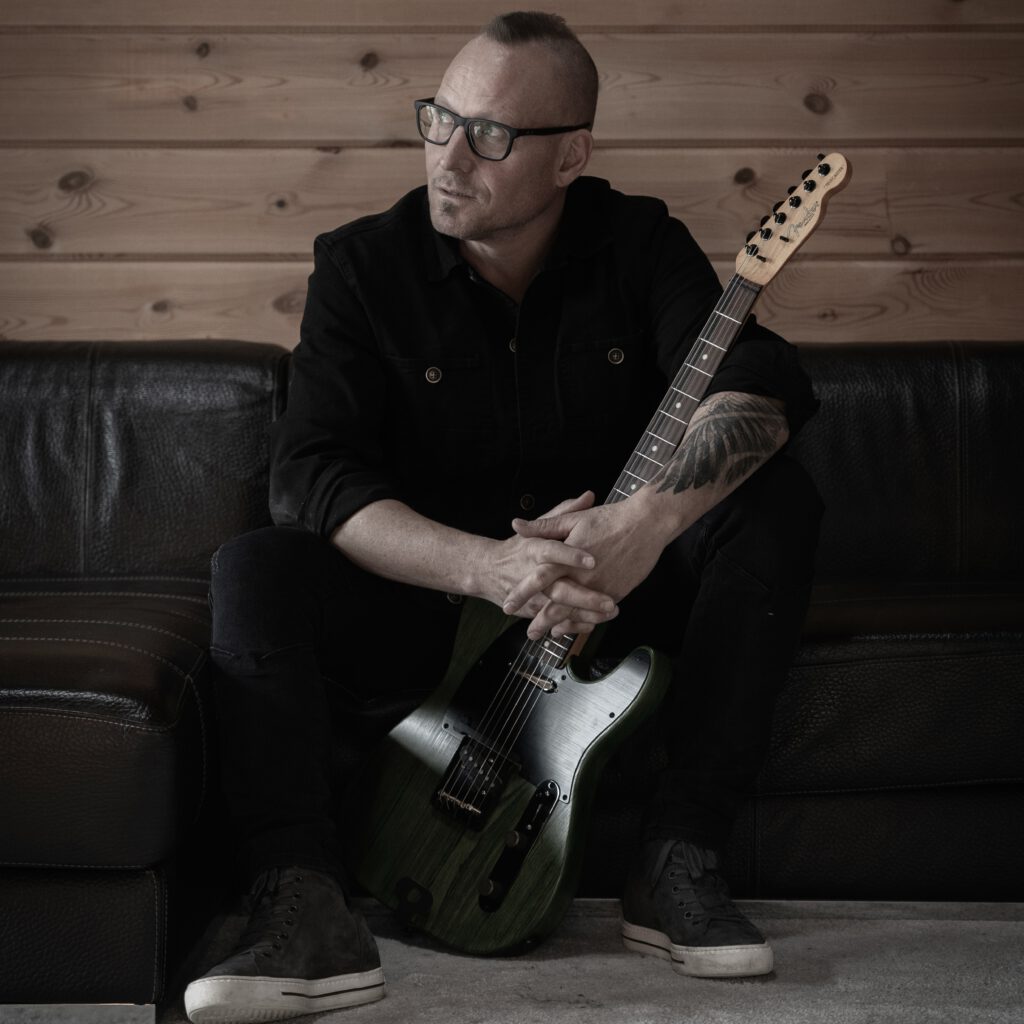
Q: I often explore how personal decisions shape a musician’s signature sound. Which choices most define your sound—your guitar tone, your sense of space, your restraint with beats, your production aesthetics?
Tony: What I’m doing at the moment gives me great satisfaction. I spent a long time on stage. It was an incredible but also exhausting and challenging time, with a lot of traveling, stress, and pressure. To be honest, I don’t really feel like doing that anymore. I find collaborations I enjoy very exciting and enriching. There is certainly still room for improvement.
Q: Looking back: what were the biggest turning points in your creative journey—moments that changed how you make music (for example: your formal training, your production years, and the decision to return after the long break)?
Tony: Each of these moments was very important and decisive. I practiced with great discipline for many years—every day, for hours. That was definitely a good foundation. I just wanted to emulate my role models.
Tony: Studying at the Guitar Institute of Technology in Hollywood was definitely a big deal. Growing up with 700 guitarists and many other musicians and greats, and studying different styles, was very formative and intense. I could hardly decide which subjects to take because I was interested in everything. But after a few months, I had to realize that life is too short to master all styles. The years on the big stages were also very cool, even if they were exhausting and not always sensible. But it was definitely an incomparable experience.
Tony: The long break and personal reorientation were certainly essential—and a big step on a personal level. During my years as a producer, I had contact with celebrities on several occasions. That also opened my eyes. Success is not only a blessing.
Closing
Q: Because We Are is music that can accompany everyday life—dreaming, relaxing, learning, letting go. What do you hope listeners feel or take away when they live with this album?
Tony: I hope people enjoy my music. Exactly what they do with it is beyond my control. I hope it gives listeners a sense of confidence and relaxation—and also gives them goosebumps here and there.
Q: If you could give one piece of advice to someone at the beginning of their creative journey—especially someone navigating doubt or a “silent phase”—what would it be?
Tony: Approach the whole thing as relaxed as possible. Study role models closely, practice diligently, and be patient. It takes a lot of hard work and time, but it’s definitely worth the effort.
Q: Finally: what’s next for you after Because We Are—do you feel pulled toward expanding this lo-fi/ambient/electronica world, returning more to guitar-forward pieces, collaborations, or something completely unexpected?
Tony: The next album, ‘Tales of Stillness,’ is already in the can and will be released in April 2026. It’s another lo-fi guitar album. This style suits me very well, and apparently my listeners do, too. Further collaborations are already in the pipeline. I’m looking forward to that. What comes next remains to be seen.