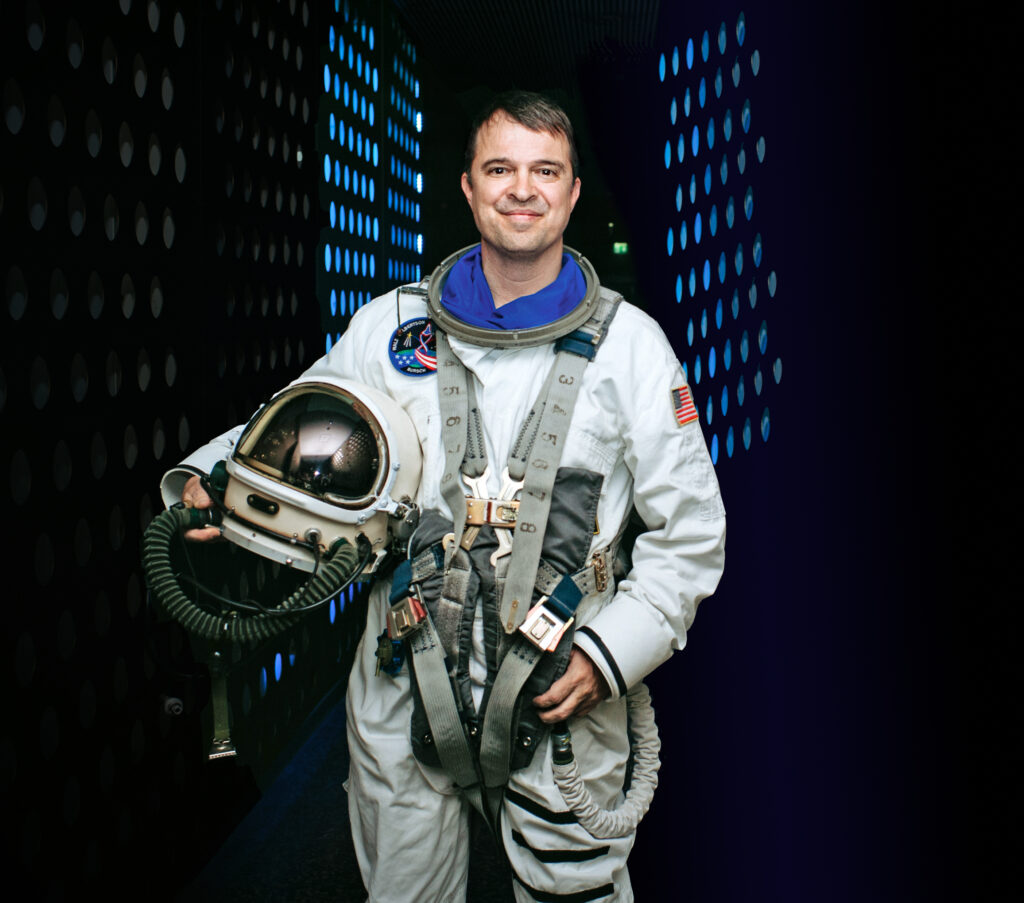
Thomas Foster creates emotionally direct electronic music and world-class broadcast sound branding—balancing hook craft, orchestration, and modern sound design while teaching thousands of producers along the way.
Introduction
Q: For people discovering you for the first time: how would you describe yourself as an artist—and how do you balance your worlds of solo releases, sonic branding, and education?
Thomas: I started making music when I was six years old, and by the time I was twelve, I already had a clear vision: I wanted to become a music producer. Since then, I’ve been working toward that goal. In my early twenties, I had my first successes with Hitradio Ö3, Austria’s only major pop radio station at the time. What shaped me early on was that I was never focused on just one lane. One day I’d produce a commercial that had to sound a certain way, the next day a radio jingle with completely different requirements, and then music for children’s television—again, with a totally different aesthetic. I realized quite early that I actually love this process of stepping into a musical style I’ve never worked in before, understanding it, and then trying to recreate it as authentically as possible. That mindset still defines my work as an artist today. On Spotify, which for a long time was more of a side project but has become much more important to me in recent years, I’m still very much a chameleon. I might produce a trance track one day, and a chillout track the next—or deep house, EDM, hyper techno, or even a full Christmas album inspired by the sound of 1970s orchestral recordings. Of course, that makes it harder to build a traditional fanbase, because people who love one track might not connect with the next. But interestingly, the place where everything comes together is my YouTube channel. There, I’ve built a community that doesn’t follow me for one specific sound, but for the idea behind it—the curiosity, the exploration, and the willingness to try different things. In a way, that’s where the consistency lies. Even though the music changes, the intention behind it stays the same. That’s probably the most honest version of who I am as an artist.
Q: You started on piano early and studied composition at the Mozarteum as a teenager. What were the biggest formative moments that shaped your musical instincts—and when did you realize production could become your life’s work?
Thomas: My relationship with piano lessons was quite complicated for a long time. On one hand, I knew very early—around the age of six—that I wanted to become a musician. At first, that probably meant something like becoming the next Michael Jackson. Later, around twelve, that vision became more concrete: I wanted to be a music producer. But the piano education I received was rooted in classical music—Bach, Haydn, Mozart, and Beethoven. Honestly, that world didn’t connect with me at all. I wanted to be able to play the piano, but I didn’t want to practice it that way. I felt no emotional connection to that repertoire. When I was sixteen, I told my parents that I didn’t want to play Mozart and Beethoven anymore—I wanted to play The Beatles and Queen. Fortunately, my piano teacher was very open to that. She started teaching me harmony and how to play pop songs, and that changed everything. For the first time, I felt like I had access to a musical language that was actually connected to what I loved. Suddenly, I had the tools—the alphabet—to create music that felt real and relevant to me. That was a major turning point. Interestingly, when I later studied composition at the Mozarteum, it felt like a step backward at the time. Looking back now, though, I can see how valuable that education was—especially in the orchestral work I do today. Still, the most important key for me has always been experimentation: learning by doing, exploring, and figuring things out hands-on.
Latest Work
Q: What would you like listeners to know about your current musical chapter?
Thomas: Coming from a background in commercial music and radio jingles, I was trained to think less about my own emotions and more about the emotion of the product. That mindset still influences my work as an artist. But every now and then, I consciously stop and remind myself that this isn’t about what others might feel—it’s about what I feel. When that happens, everything changes. There are moments in the studio when I get emotional—not from sadness, but from a deep sense of happiness and connection. I’m not always sure whether listeners can hear that difference. But I can feel it, and that alone makes this current chapter incredibly meaningful to me.
Q: Across your recent releases, what emotional or conceptual thread do you keep returning to—and why does it matter to you right now?
Thomas: Music is always experienced at different points in time—one for the artist and another for the listener. What you hear today represents where I was creatively in the past. Internally, though, I’ve already moved on. Right now, I’m in a phase where I want to redefine my sound—to develop a clear artistic DNA that truly represents me. That direction is already quite far removed from what you can currently hear in my latest releases.
Creative Approach
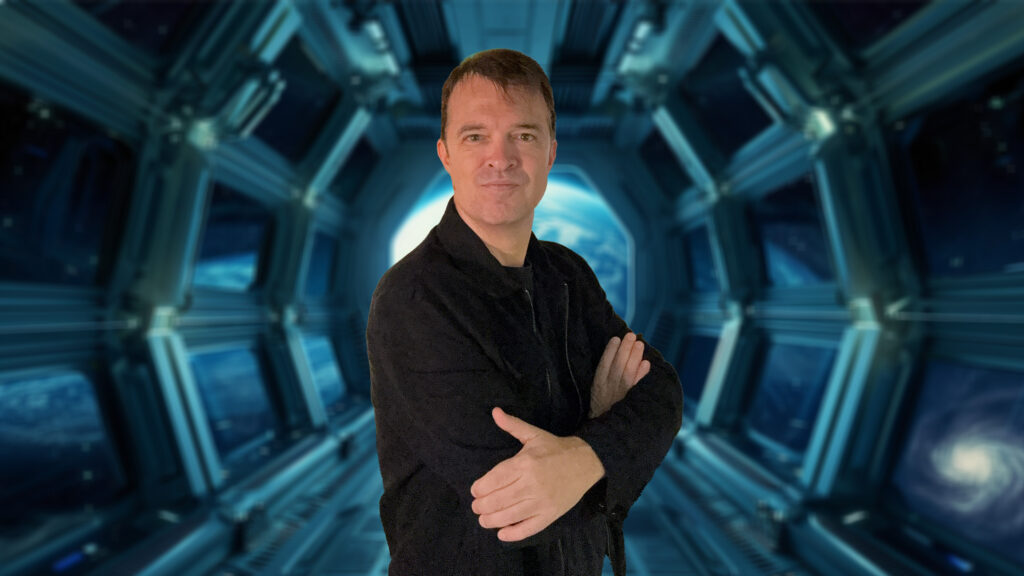
Q: Your background in writing for radio/TV teaches extreme clarity and impact. How does that ‘broadcast mindset’ influence your songwriting, sound design, and arrangement when you create music under your own name?
Thomas: Client work, personal music, and my YouTube channel are deeply connected. Client work gave me speed and routine. My own music allows me to experiment. And YouTube forces me to learn even more deeply. All three areas constantly feed into each other, and that exchange is what keeps everything evolving.
Q: Can you describe a moment in a project where everything clicked—or almost fell apart? What decision saved it?
Thomas: The most important moments often don’t happen in the studio. They happen in everyday life—when suddenly, you know how something should sound. Sometimes I’ve completely finished a project and then had that moment. I threw everything away and started again. That’s the difference between something good and something truly special.
Personal & Creativity-Related
Q: Outside the studio, what keeps your creative engine running—places, routines, films, books, conversations, silence, something else?
Thomas: I don’t struggle to become creative—I struggle to switch it off. Even on vacation, my mind starts working after a short time. Ideas keep coming. It’s driven by something very deep—probably rooted in early recognition and motivation. It can be exhausting, but it’s also what keeps me moving.
Q: Do you follow a repeatable workflow when you start a track, or do you thrive on spontaneity? What’s one habit that consistently leads to better results for you?
Thomas: I have two workflows. One is structured: beat, chords, arrangement. The other starts with the core idea—the emotional center. And the second one usually leads to better results.
Q: How do you deal with creative blocks or self-doubt—especially when you’re under deadlines?
Thomas: I’m not working alone—we’re a team of three producers. We compete, but we also support each other. That dynamic helps us overcome creative blocks and pushes us toward better results.
Inspiration & Listening
Q: What artists, albums, or producers have inspired you recently—and what specific element sparked you?
Thomas: I had a powerful experience in Ibiza at UNVRS, seeing Eric Prydz perform “Opus.” The combination of music, visuals, and energy created a state that felt almost unreal. It reminded me how powerful music can be.
Q: If you could recommend one piece of music—any genre—that everyone should hear at least once, what would it be and why?
Thomas: “Don’t Stop Me Now” by Queen. No other song captures pure energy and positivity in such an explosive way.
Creative Philosophy & Vision
Q: Where do experimentation and risk-taking fit into your work today—both in client-driven productions and in your personal releases? What’s a ‘safe risk’ you love taking?
Thomas: We’ve always believed in doing things differently. Today, technology allows us to take safe risks—to experiment freely while still staying in control.
Q: If there were no limits—no deadlines, no budget constraints, no technical restrictions—what would your dream project look like?
Thomas: A creative space near the sea, with artists constantly collaborating. A place where music happens naturally—something between Ibiza and Paisley Park.
From Silence to Sound – Creative Identity
Q: I often explore how personal decisions shape a signature sound. Which choices define yours most clearly—your harmonic language, grooves, instrument palette, sound design, mix space, or something else?
Thomas: Not complexity—emotion. Everything starts with one question: what should the listener feel?
Q: Looking back, what were the key turning points that changed how you create?
Thomas: Building Foster Kent with a partner—and starting my YouTube channel. Both changed everything.
Closing
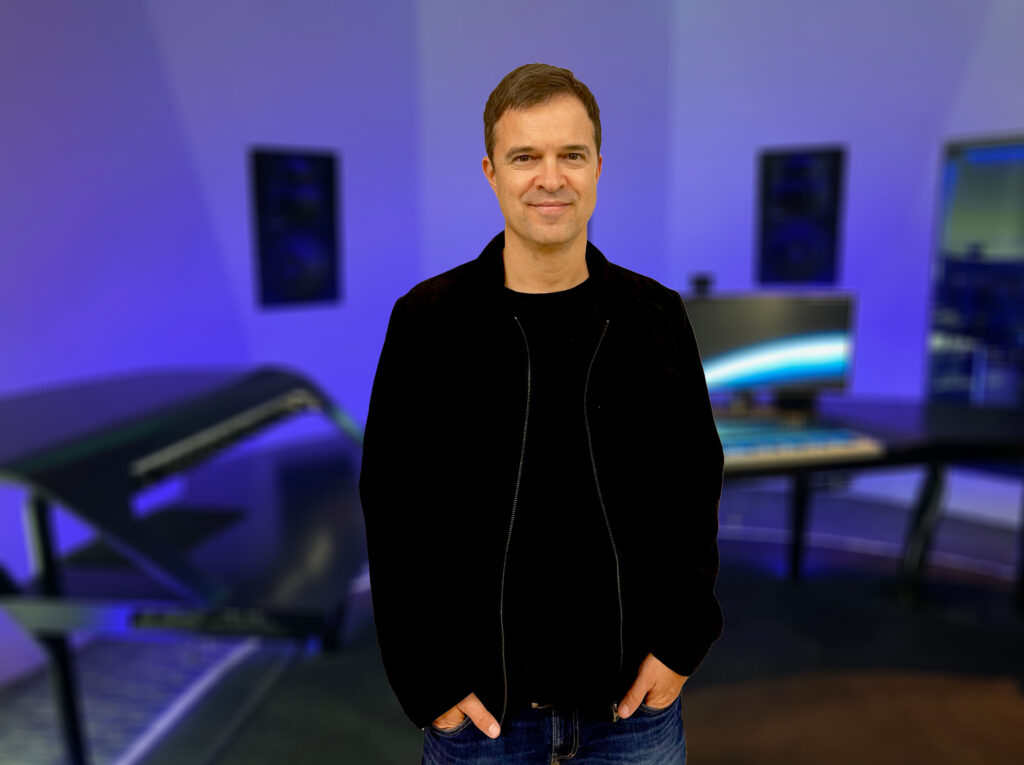
Q: What do you hope listeners feel or take away from your music—especially on days when they need calm, energy, or a reset?
Thomas: I once had a moment in the car with my son, singing along to a song. If I can create something like that for even one person, that’s enough.
Q: What’s the most valuable advice you’d give to a producer who’s overwhelmed by options and wants to find their own voice faster?
Thomas: Don’t try to be unique from day one. First, become good within a space that works. Then evolve. Your voice will come naturally.
Q: Finally, what’s next for you—musically, professionally, and creatively? What should we watch out for in the coming months?
Thomas: In the early 2000s, I built a live instrument called NYX (N-Y-X)—a transparent touchscreen that allows me to perform electronic music live while facing the audience. You can actually find performances of it on YouTube if you search for “NYX Thomas Foster.” Now I’m rebuilding it from scratch, taking it to a completely new level and integrating modern technology and artificial intelligence. This will become a new artistic project with its own identity and name, alongside my work as Thomas Foster. My goal is to bring it to life by the end of the summer. It truly feels like the beginning of a new chapter.