SINE creates expansive, instrument-rich ambient that feels meditative yet alive—and Impuls captures a bold new way of working: fast, intuitive, and guided entirely by the moment.
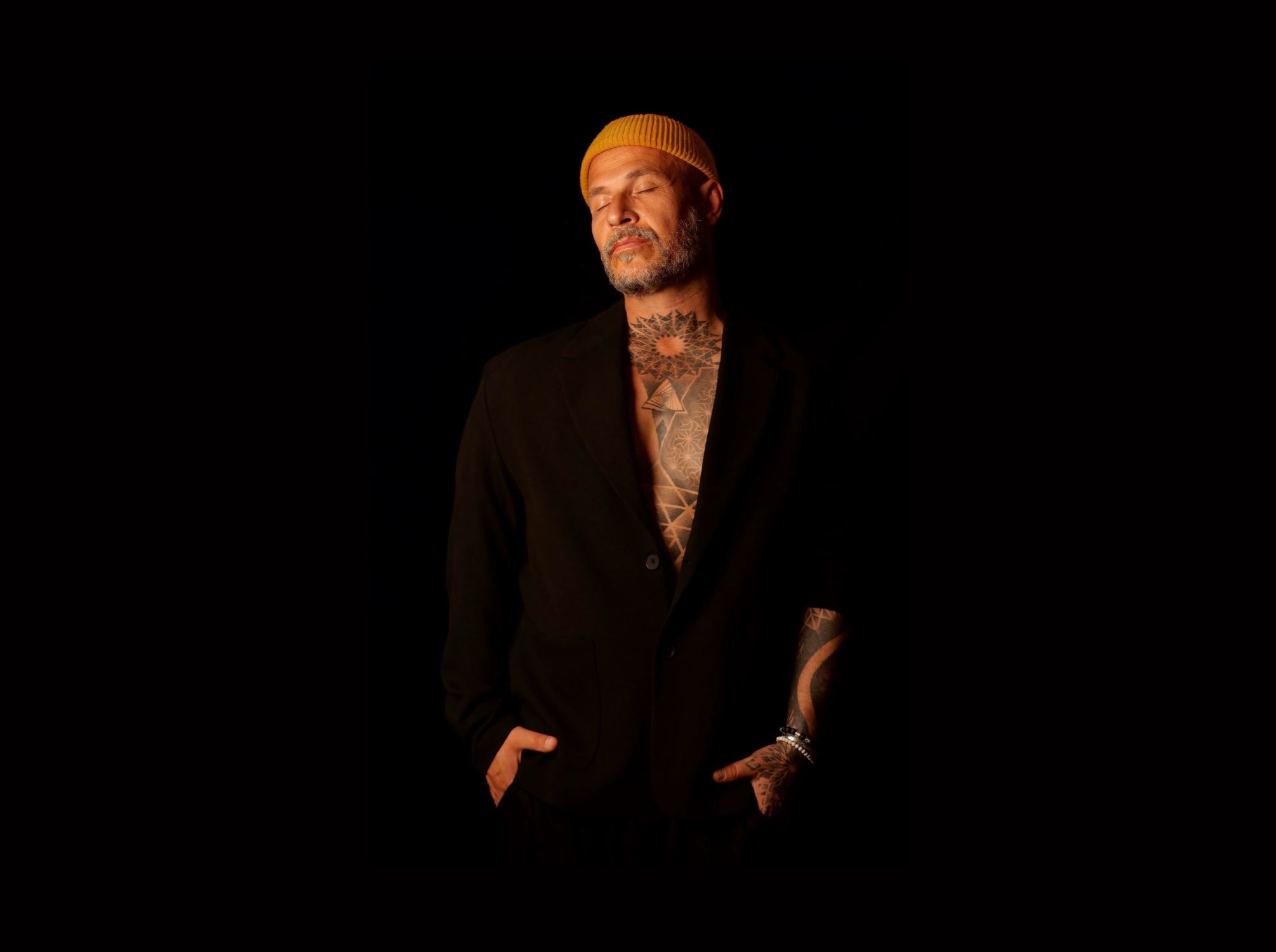
The Interview
Introduction
Q: For those who don’t know you yet: how would you describe yourself as an artist today—and what does the name SINE stand for in your musical world?
SINE: I see myself as a traveler within the world of ambient and downtempo — always curious to explore new directions and gently step beyond familiar boundaries.
My music is meant to touch listeners on an emotional level and invite them into a quiet inner journey.
A few moments of stillness.
Time to be fully present with themselves and the sound.
A soft pause where the outside world fades, and drifting becomes possible.
To me, SINE also represents everything beautiful and positive in this world.
Inspired by the sine wave — the pure building block of all sound — it feels calm, warm, and soothing, yet always in motion and quietly evolving.
Q: Your musical path started early (accordion lessons, later keyboard, then self-taught guitar), and you’ve played in bands across different genres before building your own soundscapes in the studio. Looking back, was there a defining moment where you felt, “This is the direction I want to go”?
SINE: I would say this direction has always been within me, quietly present from the very beginning.
Whether in the past, playing in grunge or metal bands, or later in the world of synth pop, there were always these calm passages — the silent, gentle moments inside the songs.
Very often, those became my favorite parts.
Maybe it was only a matter of time until I found a project where I could fully express myself in this kind of sound.
Latest Work
Q: Please introduce Impuls in your own words. What kind of album is it for you—and how would you like listeners to approach it (deep headphone listen, morning routine, background focus, late-night reflection, etc.)?
SINE: As the album title already suggests, Impuls was born exactly from that feeling.
I woke up in the morning with the idea of following my impulse each day — allowing a new piece of music to emerge before noon.
Created purely from the moment.
Without overthinking, without getting lost in details, simply moving straight to the essence until a track had taken shape by the end of the morning.
In this way, seven songs were finished within a single week.
I would describe the album as deeply cinematic.
Many pieces begin in stillness and gradually unfold, gently rising toward a quiet finale.
I consciously let go of genre expectations or the idea of doing things a certain way just to reach as many playlists as possible.
It was simply me in that moment, perhaps also my most experimental album so far.
Where or how people listen to it doesn’t really matter to me.
What matters is that the music moves someone in some way.
Q: Impuls includes eight new tracks plus the previously released “Signs of Light,” “Dreamland,” and “Mirror.” How do these pieces belong together—and what story (or arc) do they form as one album?
SINE: Well, these three pieces were born from the very same feeling as the rest of the album — created deeply from impulse.
Q: The title Impuls suggests movement and immediacy. What emotional or conceptual thread did you keep returning to while making this record?
SINE: Trusting your own feeling, your inner flow, and the impulses within you.
No rules, no pressure — just the freedom to create openly and honestly.
Creative Approach
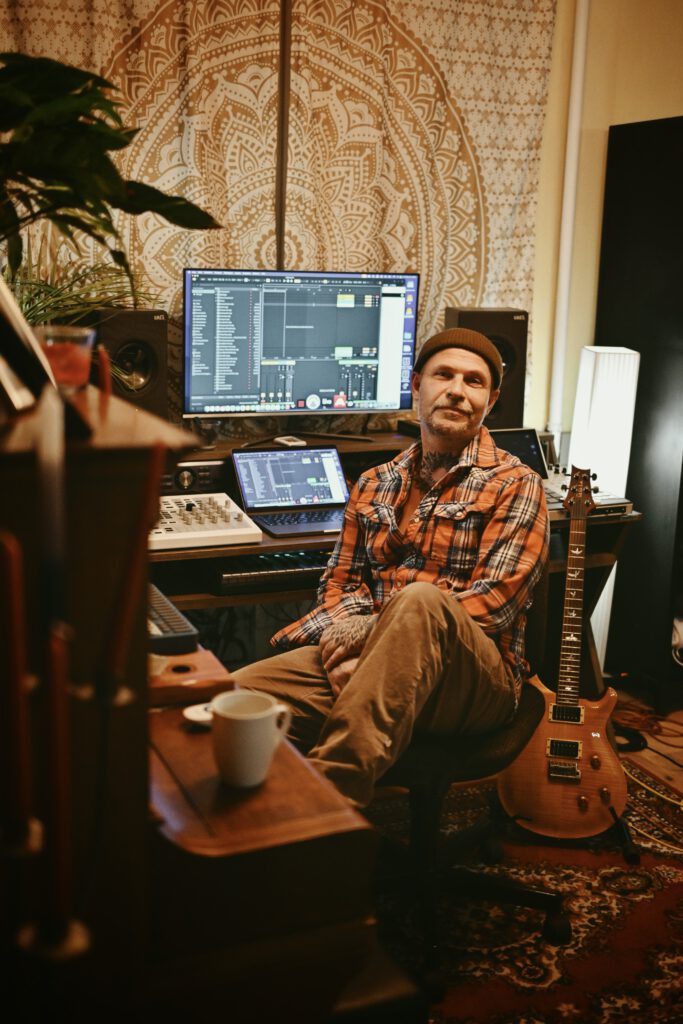
Q: This album began as a creative challenge: developing a new song idea every day for a week—resulting in eight demos in ten days. What did this constraint unlock in you that a slower process might not?
SINE: It opened up a deeply creative and impulsive way of writing and producing.
I consciously allowed small imperfections to remain, without approaching things too perfectionistically.
Letting go of genre boundaries.
In this way, I believe a very honest album came into being.
Q: You described the process as a “meditative flow”—diving in every morning and letting yourself drift. Was there a moment during the production where everything clicked—or a point where you thought the concept might not translate into a finished album?
SINE: No, that moment didn’t really happen.
I can imagine creating another album in a similar way at some point.
Impuls is already a little while behind me, and since then I’ve released new songs, with more new music currently in the making.
I feel the core idea behind it has only grown stronger over time.
The newer pieces are also based on this same principle.
Personal & Creativity
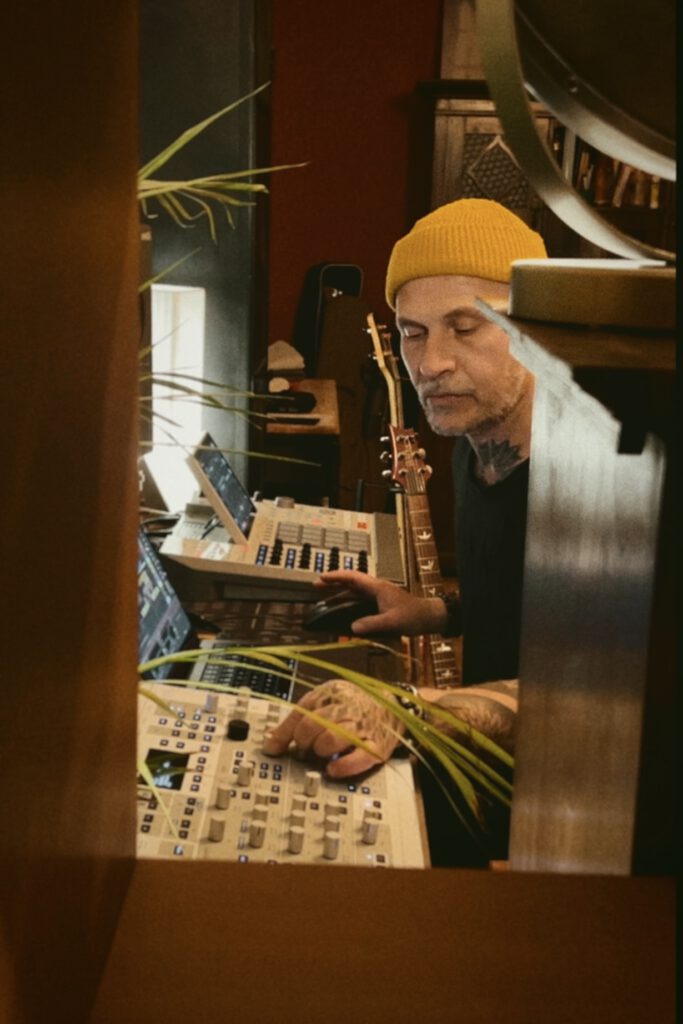
Q: Impuls is also a conscious change in your setup: you switched off the familiar groovebox/sampler workflow and created the album with software instruments and DAW mixing—while bringing in many real instruments (guitars, bass, harmonica, accordion, felt piano, drums, and more). What made you choose that path—and what did it do to the sound and the decisions you made?
SINE: I simply wanted to try something new.
To step away from the MPC and return more toward classic audio recording — like in the old days with an eight-track tape machine.
So at the beginning of each session, I used the DAW purely for recording audio, whether capturing a guitar riff or playing simple synth lines.
These recordings always became the starting point of the tracks.
I don’t think it really changed the sound itself.
In today’s digital world, the sonic quality is already on a very high level — whether on the MPC or inside a DAW.
It was more the way of working that shifted slightly.
Q: Many of these instruments go back to your childhood. What’s the personal connection there—and did working this way change how “close” the music felt to you?
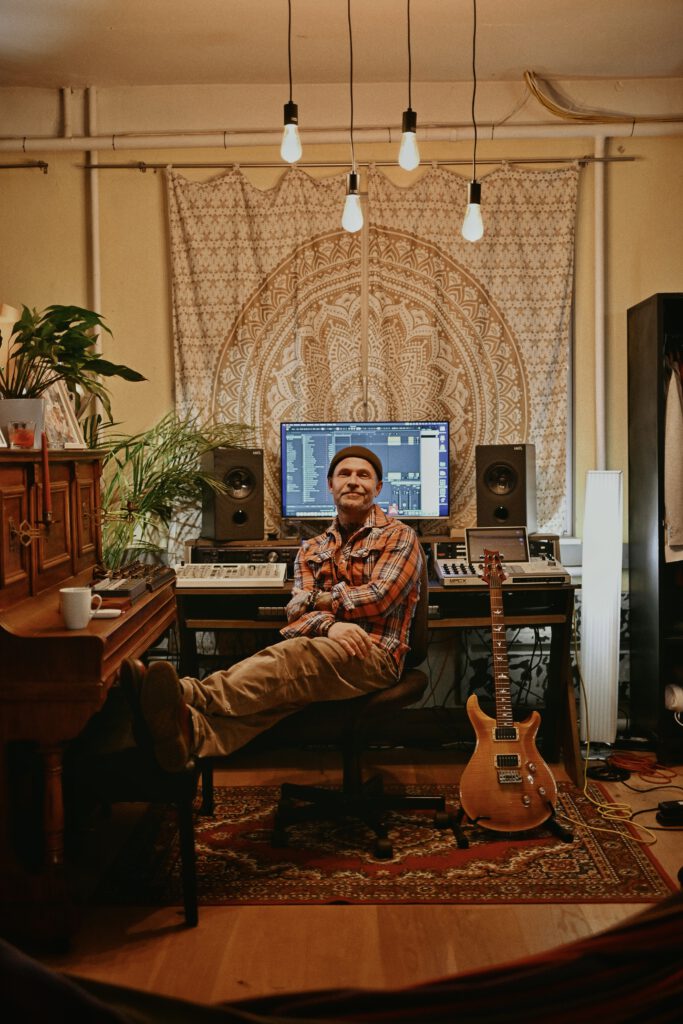
SINE: Well, I naturally have a very special connection to the guitar.
I would still call it my favorite instrument.
My PRS electric guitar is more than twenty years old now, and it has been through a lot with me — which creates a quiet bond.
Without a guitar, tracks almost feel a little unfamiliar to me.
After all, it was where everything began.
My very first guitar was a gift from my father.
Q: You intentionally didn’t think about whether tracks would generate a lot of streams—you focused on authenticity. In today’s music landscape, that’s a strong stance. How do you protect that mindset when the outside world can be loud?
SINE: I often feel that there is already more than enough inauthentic music in the world.
If I manage to stay fully with myself, to let things flow calmly, and to gently switch off the outside noise, then I know I’m on the right path.
It’s almost like turning my mind off — and in that space, SINE begins to emerge naturally from within me.
And to remain open to the new.
To try unfamiliar things and keep moving forward.
Yet always staying close to myself.
Inspiration & Listening
Q: Which artists or albums have inspired you most recently—and what did they spark in you (composition, atmosphere, sound design, use of instruments, emotional pacing)?
SINE: Oh, interesting question.
These days I actually find myself listening to a lot of older music again.
From Led Zeppelin and Pearl Jam to Sigur Rós, but also Massive Attack and Portishead…
And of course, one of my all-time favorite albums: Spirit of Eden by Talk Talk.
Q: If you could recommend one piece of music—any genre—that everyone should listen to at least once, what would it be (and why that one)?
SINE: Maybe “After the Flood” by Talk Talk, from my second favorite album, Laughing Stock.
A truly beautiful ten-minute dream journey.
Creative Philosophy & Vision
Q: Impuls sounds deeper, more expansive, a bit more unpolished—yet still meditative and varied. What role do imperfection and “rough edges” play in your music—especially in ambient, where things can easily become too smooth?
SINE: A very important role.
And with Impuls, I allowed myself to fully embrace it.
Imperfection and rough edges make everything feel human — and also unique and authentic.
Q: If there were no limits—no budget, deadlines, or technical restrictions—what would your dream project be right now? (For example: an instrument-heavy ambient record, a film/series score, a live concept with real instruments, an immersive format release, or something completely unexpected.)
SINE: Simply retreating for a few months to a small house in Italy.
Surrounded by my guitars and effect pedals, accordion, and other acoustic instruments, a few microphones, and an analog eight-track tape machine — letting purely acoustic pieces come to life.
From Silence to Sound – Creative Identity
Q: I often explore how personal decisions shape a musician’s signature sound. Which choices do you feel most strongly define your sound—your sense of space, your instrument palette, your relationship to rhythm, your production aesthetics?
SINE: Are these truly conscious decisions, or rather unconscious inner impulses and preferences — perhaps also listening experiences from the past?
I believe the most important thing is to begin the journey toward yourself, and to trust yourself along the way.
From there, your own sound will naturally reveal itself.
Q: With a long arc from Cross That Line to Ruhepol, Tiefblau, Einklang (including immersive releases), and the guitar-focused Tiefgang EP—what have been the most important turning points that changed how you make music?
SINE: Hmm… in a way, every album or EP has been a turning point for me.
I have always tried to be authentically SINE.
But perhaps Tiefgang was truly something special.
Purely acoustic, without any embellishment.
It showed me that it doesn’t take much at all to express myself through music — even in the most acoustic, reduced form.
Closing
Q: What do you hope listeners feel or take away when they spend time with Impuls—especially on days when they need calm, focus, or a reset?
SINE: I hope listeners simply have a beautiful moment with the music.
That they can dive deeply within, that gentle memories may surface, or that they feel emotionally touched in some quiet way.
Just listening.
Just feeling.
Q: If you could give one piece of advice to someone at the beginning of their creative journey—especially someone navigating doubt, comparison, or a “silent phase”—what would it be?
SINE: Try to follow your own path, to find your sound and trust in it.
Allow yourself to explore, to try new things, and to trust what truly resonates with you — then bring it into the world.
The world needs every creative soul more than ever.
Q: Finally: what’s next for you after Impuls—are you curious to go further down this software-based, instrument-rich path, return to a more haptic workflow, explore more guitar-led ambient, or open a completely new chapter?
SINE: We’ll see.
I think there will definitely be a lot of acoustic elements ahead — very organic and truly handmade.
Thank you, Thomas.
This was a real pleasure.