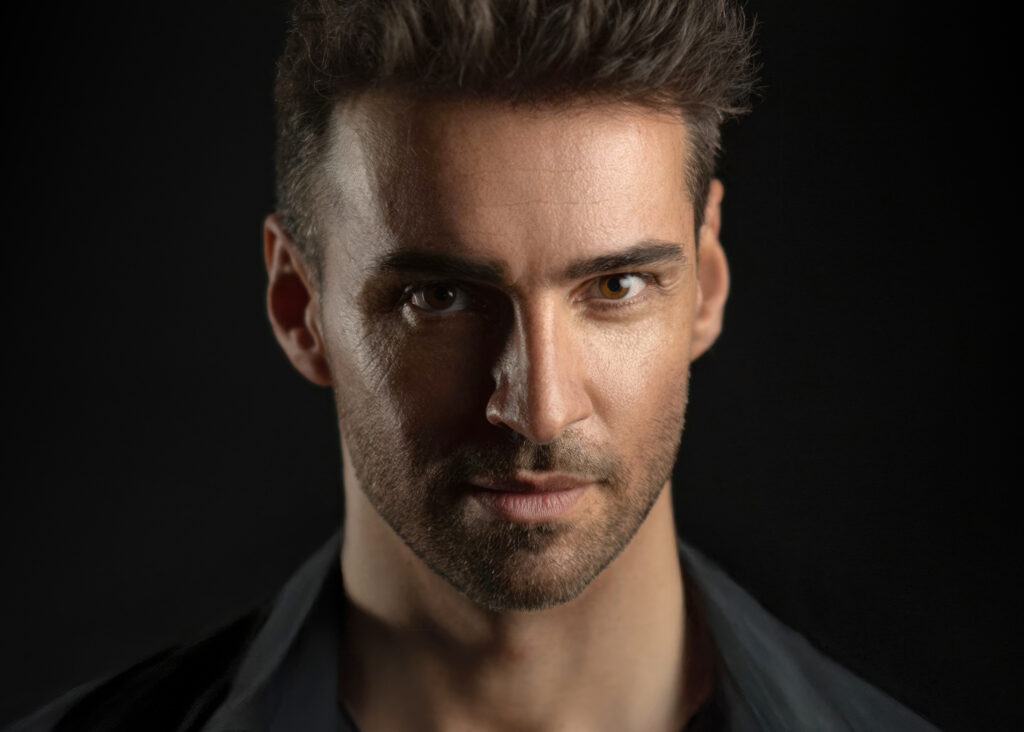
Sinatic is an exceptional songwriter—hook-smart, emotionally precise, and deeply musical—who pairs pop-level craft with cinematic electronic production. Just as impressive is his collaborator mindset: he’s worked with singers around the globe with a rare mix of empathy and clarity, and his guitar playing adds a warm, human signature that cuts straight through the electronics.
The Interview
Introduction
Q: For those who don’t know you yet: how would you describe yourself as an artist in a few sentences—and what does the name Sinatic stand for in your musical world?
Sinatic: I describe myself as an artist who prioritizes emotion as the primary driver and technique as its servant. To me, music is a translation of the intangible into the audible; every tone carries a specific impulse that the listener receives as a feeling. Because of this, quality is non-negotiable. I believe even the most microscopic sonic detail can pivot the emotional weight of a song. My work exists in the fertile ground between cinematic soundscapes, electronic textures, and melodic pop, creating expansive musical spaces that invite the listener to step in and connect on a deeper level.
The name Sinatic is the heartbeat of this philosophy. When I established the project in 1998, I sought a name that felt both mysterious and timeless – something that carried the evocative spirit of projects like Enigma. I discovered the term “Sinatic” in an essay on ancient languages, and it resonated instantly. It carries the weight of a learned, classical term; its roots evoke the “Sinaitic” – a sense of origin and revelation – while its suffix suggests a fundamental state or principle. Intuitively, the word represents music as a primal source, a language that exists before words. For me, Sinatic is a creative identity dedicated to authenticity, depth, and a connection to something fundamental and timeless.
Q: You began in chillout and later moved through pop and more song-driven work—then returned to your roots with two decades of experience behind you. Looking back: what were the key turning points that shaped your identity as producer + songwriter?
Sinatic: Looking back, the biggest turning point was leaving my comfort zone. I grew up in the 1980s, and at some point, I discovered the music of Vangelis, Jean-Michel Jarre, and Mike Oldfield. Their melodic worlds had a huge impact on me. The atmosphere, the emotion, and especially the sound of synthesizers fascinated me from the very beginning. That was probably the moment when I first realized how powerful sound can be in creating feelings and images beyond words, and it shaped my musical instincts long before I started producing myself.
I started in chillout music, where atmosphere and emotion were always at the center, but over time, I became curious about songwriting and the craft behind songs that truly stay with people. Moving into pop and more song-driven production forced me to think differently. Suddenly, it was not only about sound and mood, but also about structure, storytelling, and creating moments listeners remember.
Another important turning point was working behind the scenes with different producers and artists. Being part of collaborative environments taught me how much discipline and intention lie behind great music. I learned that a strong song is rarely accidental. It is the result of countless small decisions, from melody choices to sound design and arrangement. That experience shaped my identity as both a producer and songwriter, because I began to see production and songwriting as one unified process rather than two separate roles.
Returning to my chillout roots later felt almost like coming full circle, but with a completely new perspective. After two decades, I approached atmospheric music differently. I brought songwriting sensibility, emotional storytelling, and technical precision back into a genre that originally inspired me. For me, one of the most important lessons along the way was that music only truly connects when you genuinely feel it yourself. Authenticity is essential. If the emotion is real during the creation process, listeners will recognize it, and that honesty ultimately defines my identity as an artist today.
Latest Work
Q: Please introduce your latest release in your own words. What is it, and how would you like listeners to approach it—headphones, late-night listening, a drive, background focus, or a deep “front-to-back” listen?
Sinatic: My latest release, Almost Yours, captures a very special energy that has always lived somewhere inside my musical DNA. It is deeply inspired by the emotional atmosphere of the 1980s, a time when melodies felt cinematic and nostalgic at once, but translated into a modern production language. I wanted to combine that timeless synth-driven feeling with contemporary sound design, so it feels familiar and new at once.
The track carries a lot of energy, but it also has a bittersweet undertone that has become something like a signature element in my music. I’m always drawn to that emotional space between hope and nostalgia, where a song feels both uplifting and melancholic at once. Almost Yours lives exactly in that tension.
The song is also a first glimpse into my upcoming album Pop Evolutions, which will be released later this year. As one of the singles from the project, it captures the album’s direction very well, blending emotional songwriting with modern pop production while retaining subtle retro influences.
Ideally, I would love listeners to experience it with headphones or during a late-night drive, when music feels more personal and immersive. It works as an energetic track, but it really reveals its emotional layers when you give it your full attention. For me, it’s not just background music. It’s meant to create a mood, a moment, and maybe even a memory while you listen.
Q: How would you describe this release (album/EP/single) in your own words—and where does it sit in your evolution as an artist right now?
Sinatic: I would describe Almost Yours as a bridge between my musical roots and where I am creatively today. It combines my early love for atmospheric electronic music with everything I’ve learned through years of pop songwriting and production. For me, it feels like a very honest snapshot of my current artistic identity.
At this point in my evolution, production and songwriting are no longer separate processes. Sound, melody, and emotion all grow from the same idea, which makes the music feel more focused and authentic. Rather than chasing trends, I’m embracing the influences that shaped me and translating them into a modern sound.
As part of the upcoming album Pop Evolutions, the release marks a phase of clarity and confidence for me as an artist, creating music that feels emotionally real and, hopefully, timeless.
Q: There’s a cinematic warmth and forward motion in your recent work. What emotional or conceptual thread did you keep returning to while making it?
Sinatic: The emotional thread I kept returning to was the idea of movement, both emotionally and personally. Many of the songs were created around the feeling of being in transition, standing between nostalgia and forward motion. I’m very drawn to that space where something feels familiar and comforting, but at the same time pushes you toward something new. That naturally created this cinematic warmth, because cinematic music often carries a sense of journey and emotional progression.
Another important concept was emotional honesty. I always try to create music that I genuinely feel while making it, because listeners can sense whether an emotion is real or constructed. Every sound choice, every melody, was guided by the question: does this create a feeling, does it move something inside? For me, music works best when it doesn’t just exist as sound, but as an emotional experience unfolding over time.
So the common thread throughout the process was balancing energy and vulnerability. I wanted the music to move forward rhythmically and sonically, while still leaving space for reflection and emotion. That contrast became a defining element of this phase of my work.
Songwriting, Hooks, Guitar & Craft
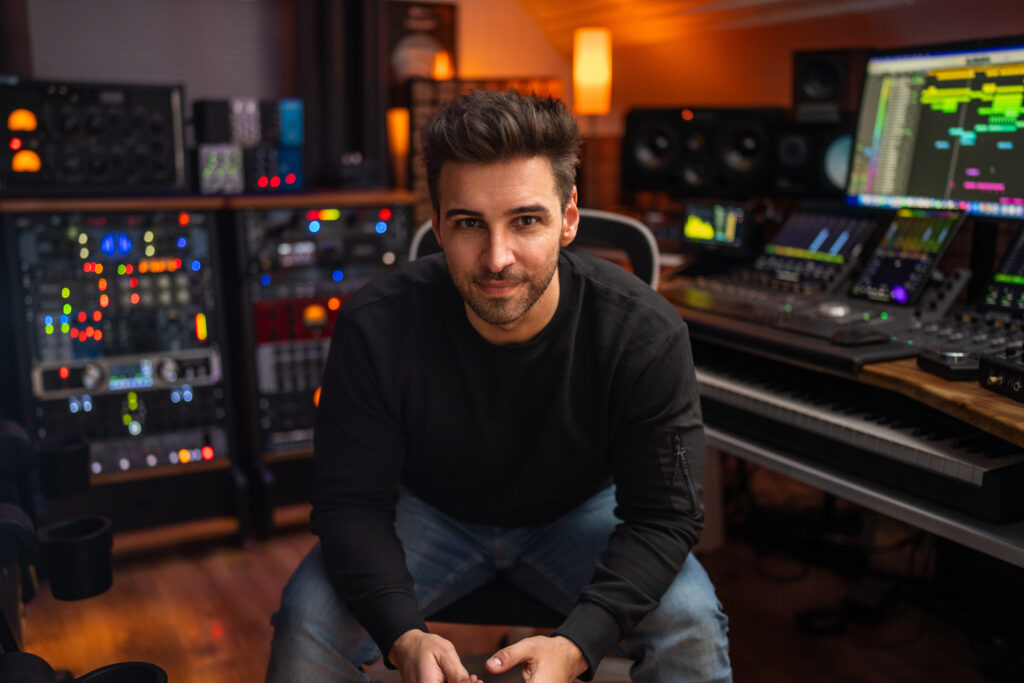
Q: You’re an exceptional songwriter—hook-smart, emotionally precise, and deeply musical. When you write, what does “great songwriting” mean to you in practice (tension/release, chorus lift, lyric economy, melodic architecture, arrangement pacing)?
Sinatic: Great songwriting starts with a simple truth: if it doesn’t feel real, it won’t work. While I utilize the technical architecture of music (tension, release, and pacing), these are always secondary to authenticity. I aim for lyrical clarity, choosing words whose “sound” complements their “sense” to let the melody breathe.
I view hooks through two lenses: in pop, they must be instantly iconic; in cinematic music, they act as a guide through more complex, atmospheric landscapes. Whether I’m writing a radio hit or a film score, my goal remains the same: to serve the emotion of the piece. By balancing technical precision with human feeling, I strive to create music that feels honest from the first note to the last.
Q: You’ve studied a “Max Martin approach” to hit-making. What parts of that mindset genuinely improved your craft—and what parts did you choose to ignore to stay authentic?
Sinatic: Studying the Max Martin approach provided me with a masterclass in the “architecture” of a hit. His methodology, which famously draws from the melodic DNA of ABBA, taught me how to use tension and release, refine arrangement pacing, and ensure that every hook lands with maximum impact. I’ve taken a deep dive into that signature “Wall of Sound,” analyzing how layering and sonic density can create an overwhelming emotional response. That discipline, focusing on how a song guides a listener from the first beat to the last, has sharpened my technical toolkit and given me the precision to write music that truly sticks.
However, I’ve learned that these “rules” only hold power when they are fueled by authentic feeling. While I embrace the structural framework of the greats, I consciously discard anything that feels like a formula without a soul. My process always returns to simplicity and emotional honesty. I allow my intuition to guide the melody – even when it bends conventional expectations – and I prioritize lyrics that feel lived-in and natural. For me, the Max Martin and ABBA influence is a powerful foundation, but the true magic only happens when that technical “Wall of Sound” meets a genuine human connection.
Ultimately, I want the listener to have a clear, guided path as they immerse themselves in my sonic world. Too much distraction creates restlessness. My goal is to remove the noise so the listener can truly settle into the heart of the song.
Q: When you write a topline or hook, how do you judge if it’s truly sticky and emotionally honest—what’s your test?
Sinatic: When I’m crafting a topline or a hook, intuition is my primary compass. I pay close attention to what lingers: the melodies that refuse to leave my head after the first listen. My process often involves creating four or five distinct variations of a hook, then stepping away to let the dust settle. Returning with fresh ears allows me to decide based purely on emotional resonance rather than the technical effort of the moment.
Sometimes, the most compelling ideas emerge from the most unexpected places. I frequently revisit song concepts from years ago; occasionally, a piece of a puzzle finally clicks in a way I couldn’t have forced back then. For me, that authentic connection is non-negotiable. If I don’t truly identify with the music, the project is moved to what I jokingly call the “graveyard of ideas.” Over the years, this archive has grown into thousands of unfinished concepts – a testament to my commitment to quality. For me, this vetting process is essential: only the hooks and toplines that genuinely move me are worthy of being brought to life and shared with the world.
Q: Your guitar playing is a real signature. How does guitar show up in your process—do you start with guitar sketches, use it to find harmony, or add it later as an emotional layer?
Sinatic: Guitar has always been a cornerstone of my sonic identity; a passion rooted in my early discovery of Mike Oldfield’s melodic sensibilities. While the era of the sprawling guitar solo has largely faded from “mainstream pop”, I’ve found subtle, modern ways to weave the instrument into almost every track I produce. My process often begins with a guitar sampler to capture the initial spark of a progression or a melodic line. However, the real magic happens during the final recording, where the physicality and expression of the strings bring a human nuance that a synth or piano simply cannot replicate.
Looking back at my body of work, guitars are everywhere, though not always in the way you’d expect. They live in the psychoacoustic layers, as “ear candy,” or as organic textures that breathe life into a mix. Whether it’s a deliberate riff or a shimmering atmospheric wash, the guitar adds a layer of organic movement to even my most electronic-heavy productions. For me, the guitar isn’t just an instrument; it’s a direct conduit for emotion, bridging the gap between high-end production and the undeniable warmth of the human touch.
Creative Approach
Q: When a track starts for you, what usually comes first: the groove, a chord progression, a lyric phrase, a vocal melody, or a sound/texture?
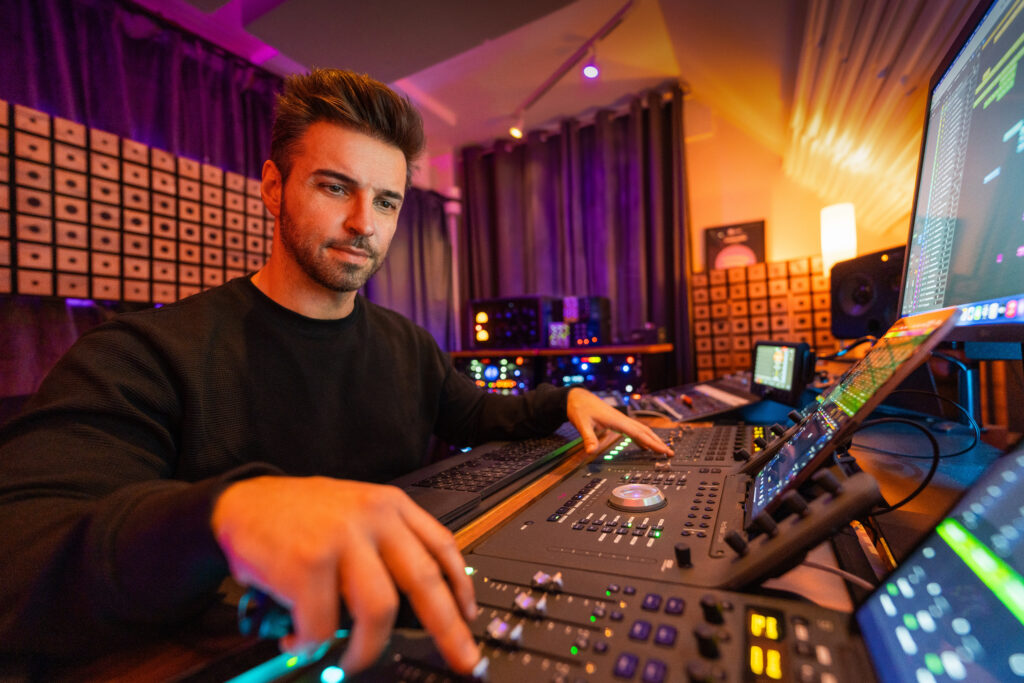
Sinatic: My creative process is fluid; there is no single starting point. Often, I begin with what I call “quick song starters” – opening a blank session and diving into the vast, vocal-like textures of plugins like Omnisphere or Kontakt. These sounds often feel less like software and more like living voices. I’ll improvise with a specific patch, letting the emotional weight of the chords dictate the direction rather than following rigid theory. Usually, as the progression takes shape, lead lines and vocal melodies begin to materialize in my mind almost instantly.
In other moments, a specific groove or a raw sonic texture might be the spark that ignites the entire arrangement. I view this stage much like EQing: while there are technical principles you can follow, there is no absolute “right” or “wrong.” The only metric that matters is whether the elements coalesce into a world the listener can inhabit. For me, songwriting is a flexible, intuitive dialogue between sound and soul, always guided by what feels right in the moment.
Q: Can you describe a moment during the creation of a recent release where everything clicked—or almost fell apart? What changed the outcome in the end?
Sinatic: For me, the most critical element of creation is sustaining the flow. If that intuitive connection breaks, I’ve learned to let the idea go rather than try to force a spark that isn’t there. I aim to ride that initial wave of inspiration as far as it will naturally take me, pushing the boundaries of the concept while the energy is still raw.
Sometimes, everything clicks with startling speed. During the sessions for my Infinity album, for example, three tracks materialized almost in a single day – evolving from a blank slate to a complete rough draft in a matter of hours. Those are the moments where technique, emotion, and timing align perfectly. Conversely, other ideas from those same sessions were “trashed” because they simply didn’t resonate.
In the end, my intuition is the final judge. If a track feels alive and honest, it moves forward; if not, I have the discipline to step away. By trusting my feelings rather than the urge to force completion, I ensure the music remains authentic. Only the songs that truly survive this vetting process possess the power to connect with the listener.
Collaboration
Q: You’re also known as a great collaborator—you’ve worked with singers around the globe, and your productions often feel tailored to the voice. What do collaborations teach you about your own sound—and how do you keep your identity strong inside a shared process?
Sinatic: Collaborations are a fascinating collision of two creative worlds, often yielding results neither artist could achieve alone. To me, the “human / soul energy” between collaborators is the secret ingredient of any great song; that chemistry is what breathes life into a project.
When working with other songwriters, I often begin as a quiet observer. I study their unique approach to melody, lyricism, and arrangement—treating their process as a distinct form of “sound painting.” This allows me to see where our techniques might merge, refine, or even challenge one another. It’s a constant evolution; I’m always looking for ways to adapt and elevate my own craft through these shared experiences.
However, I am mindful that my own identity must remain a clear thread in the tapestry. I ensure there is a recognizable Sinatic fingerprint in every collaboration – whether through my specific harmonic choices, atmospheric textures, or emotional phrasing. For me, the art of collaboration is a delicate balance: honoring the creative world of another while staying anchored in the authenticity of my own.
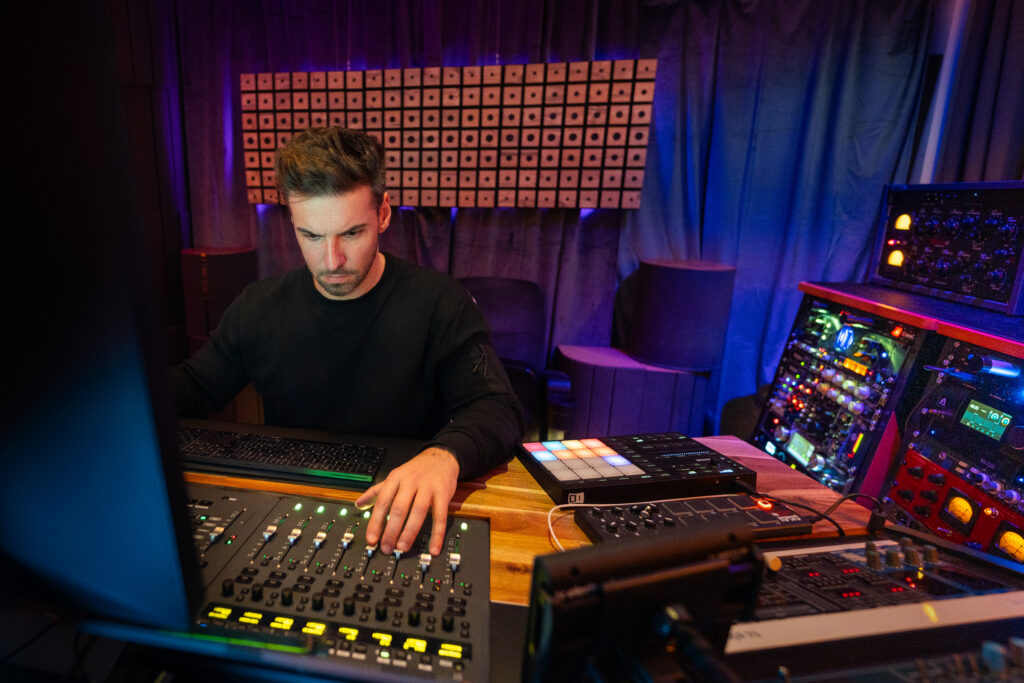
Q: When a collaboration works, what’s the real reason—chemistry, clarity of roles, a shared reference world, speed, trust, or something else?
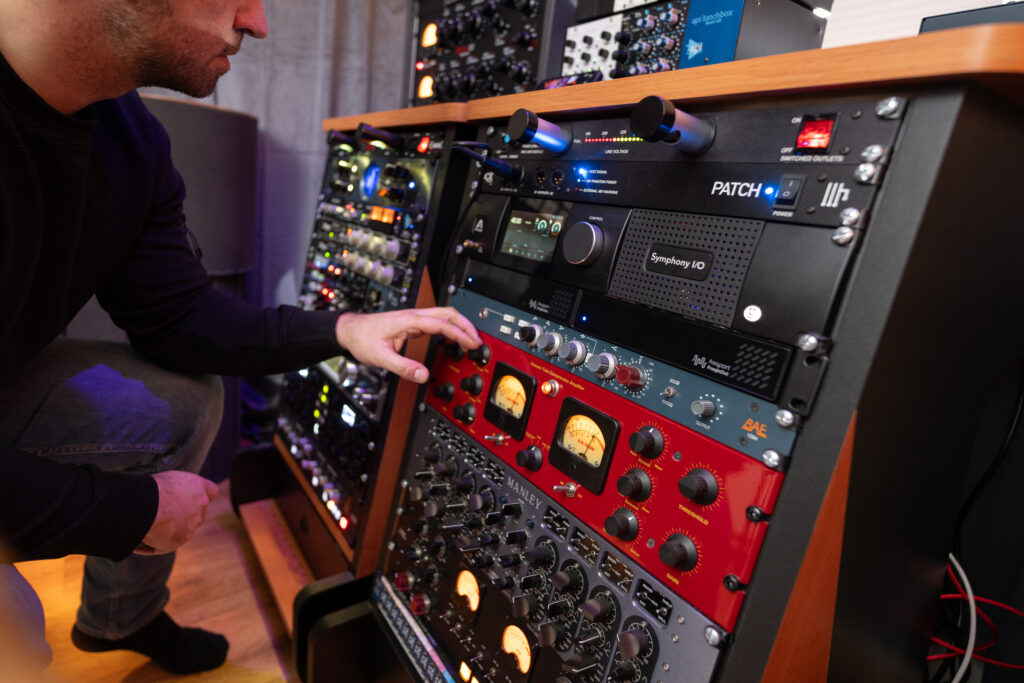
Sinatic: When a collaboration truly succeeds, it is rooted in resonance. Everyone involved must be “in tune” with the song’s ultimate purpose, allowing the music itself to dictate the direction. At this level, the ego must take a back seat. We all bring a unique set of strengths and weaknesses to the table, and the most rewarding sessions happen when we use our skills to support one another, filling the gaps and elevating the collective vision rather than competing for space.
While factors like chemistry, technical speed, and shared reference points are essential, they are secondary to trust and selfless alignment. Without that fundamental resonance, even the most skilled team can struggle to find the heart of a track. For me, that moment of alignment – where personal agendas fade, and the music takes over – is what transforms a standard session into something truly special.
Working with Thomas Lemmer – Building a Concept World
Q: You’re currently creating a collaborative concept album with Thomas Lemmer (Infinity). What was the initial spark—why did this partnership make sense artistically?
Sinatic: The initial spark for Infinity was born from a long-standing resonance with Thomas Lemmer’s sonic architecture. Having admired the atmospheric depth of his work for years, the moment came when the timing finally aligned, and it felt inevitable to merge our creative worlds into a collaborative concept album.
The results were a revelation. The synergy between our styles unlocked creative avenues I hadn’t anticipated, resulting in compositions that feel entirely unique to this partnership. To further elevate this cinematic experience, the album was mixed in immersive Dolby Atmos, a move that fundamentally enhances the spatial depth and allows the listener to step directly into the soundscape. For me, this project was the ultimate validation of my collaborative philosophy: two artists pushing past their individual boundaries to create a rich, expansive world that neither could have built alone.
Q: Compared to pop/dance writing, concept-driven chillout demands a different kind of patience and storytelling. What did you have to unlearn—and what did you bring from the pop world that actually helped?
Sinatic: Concept-driven chillout demands a unique level of patience and surgical attention to detail. Unlike the immediate gratification of pop or dance music, the production process here is far more rigorous – sonic layers are built with meticulous precision, and automation is used to breathe life into every corner of the mix. In this world, strict quantization takes a back seat; preserving the “human touch” is paramount. I focus intensely on the negative space – how a song breathes and how the dynamics shift – to ensure every detail meets a “top-shelf” standard of quality.
Paradoxically, my background in pop and dance has become my greatest asset in this expansive genre. By applying my understanding of structure, hook placement, and emotional pacing, I can guide the listener through atmospheric landscapes without losing their attention. I’ve had to “unlearn” the shortcuts of radio-ready production, yet I’ve retained the clarity, focus, and melodic intuition that make music truly compelling. The result is a sound that is deeply immersive and cinematic yet remains fundamentally approachable.
Creative Identity & Closing

Q: I often explore how personal decisions shape a musician’s signature sound. Which choices most strongly define your sound—your chord language, hook instincts, sound design, guitar touch, mix aesthetics, or your sense of emotion?
Sinatic: Ultimately, my signature sound is a mosaic of deliberate choices rather than a single element. It is born at the intersection of my specific chord language and my instincts for hooks, which together shape the song’s emotional arc. I view sound design and mix aesthetics as the architecture of the track – defining its texture and space – while my guitar touch acts as the organic pulse, providing the subtle melodic and rhythmic cues that ground the production in reality.
Above all, emotion is the connective tissue. Every decision – from a complex harmonic shift to the most microscopic sonic detail – is filtered through a single question: How does this feel? This unwavering focus on emotional intent, fused with technical precision, is what gives my music its recognizable voice. In an industry often driven by shifting trends, I choose to stay anchored in my own creative intuition. My sound is less about adhering to a genre and more about the thousands of personal decisions I make at every stage of the journey.
Q: What do you hope listeners feel or take away when they experience your music—whether it’s a chillout journey or a song built for impact?
Sinatic: Ultimately, my greatest ambition is for my music to act as a catalyst for genuine emotional connection. Whether it is a sprawling chillout journey or a high-energy, hook-driven track, I want the listener to feel something profound – be it a sense of nostalgia, a spark of hope, or a quiet moment of reflection.
I strive to create music that resonates far beneath the surface, where every texture and melody is a deliberate contribution to a larger experience. To me, success isn’t measured in plays or charts, but in those moments when a listener closes their eyes and truly gets lost in the music. If a feeling lingers long after the final note has faded, then the song has done its job. In the world of Sinatic, emotion always leads the way; everything else is there to support the heart of the song.
Q: If you could give one piece of advice to someone at the beginning of their creative journey, what would it be?
Sinatic: If I could offer one piece of advice to those beginning their creative journey, it would be this: embrace patience and become a student of the craft. Immerse yourself in the work, listen with a wide lens, and explore the vast spectrum of musical styles – but through it all, remain anchored in your own truth. Authenticity is your only true currency.
In an age of constant noise, do not let distractions dilute your focus. True creative growth requires the discipline to stay the course and the courage to protect your vision. If you remain dedicated and honest to your artistic core, the results won’t just follow – they will resonate.
Q: Finally, what’s next for you—what should we be looking forward to?
Sinatic: Looking ahead, my focus remains on creating music that moves me first, in the hope that it will do the same for the listener. I am currently diving deeper into the world of cinematic scoring, exploring the vast possibilities of film music. Several sketches are already underway as I experiment with a broader palette – perhaps even a project in the grand, evocative vein of Hans Zimmer.
While I am embracing this new variety beyond pop and dance, I remain deeply rooted in the ambient and chillout spaces that have always inspired me. For me, the next chapter is about following that same intuitive compass: exploring uncharted sonic territories while ensuring every note remains honest, expansive, and emotionally engaging.