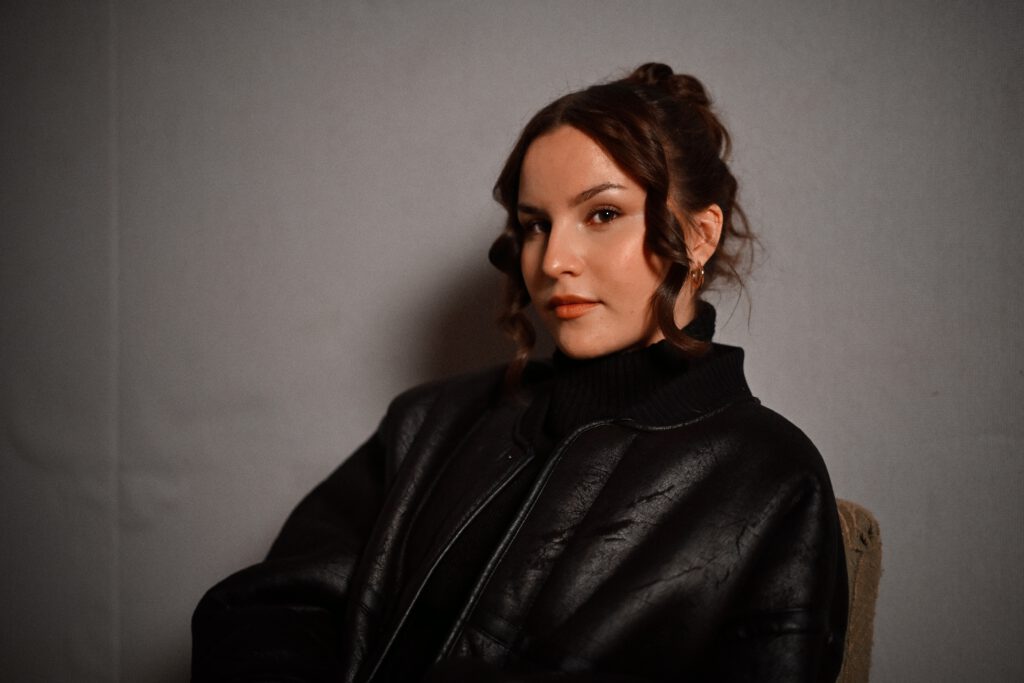
Meerle is a young, emerging artist at the very beginning of her journey—turning first sparks of inspiration into finished songs with a clear, personal voice. In this interview, she reflects on writing her first releases, what it feels like to put those early singles out into the world, and how collaboration (including working closely with her father in the studio) shapes her sound and confidence.
The Spark
Q: When you think back to the moment your “fire” for writing your own songs truly ignited—what happened, and why right then?
Meerle: My “fire” didn’t start in one single, big moment. It was more of a gradual process.
Back then, my life changed a lot. I felt uncertain, had many questions, and often didn’t know what to do with my thoughts. It was in that phase that I started writing—without knowing it would turn into songs.
At some point I realized: this is more than just writing my thoughts into a diary. It’s my way of feeling, processing, and bringing a little more order to everything in my head. When I sang my first words, I knew: this is where my heart belongs. This is how I want to express myself and show my feelings.
Q: You grew up in a musical family and recorded in your father’s studio as a kid. What did that spark in you—and was there ever a point where you had to separate from that to find “your” voice?
Meerle: I feel incredibly lucky that I’ve been able to make music with my father since childhood. It allowed me to discover music without pressure—simply in its most beautiful and honest form. For me, the studio was never a place of expectation, but a place of creativity and trust.
More than anything, it sparked joy and curiosity in me. I was allowed to try things, make mistakes, and grow—and I was always supported. That sense of safety gave me an incredible amount of confidence.
And I wouldn’t say I had to break away from that to find “my” voice. Quite the opposite: I’m very grateful to still have him by my side today, especially in production. He has known my musical path from the very first note. For me, it’s not a shadow I had to step out of, but a support system that gives me security.
Q: You started playing violin at nine. What role does your instrument still play today—as a sound, a physical feeling, a way of thinking when you write?
Meerle: Playing violin was actually my first real entry into the world of instruments. It was the first time I read sheet music and didn’t just sing music, but felt it in a different way. It was a really beautiful start.
In my own songs today, violin doesn’t play a big role anymore. But I can still tell it shaped me. When I write, I think a lot in melodies and moods, and I pay attention to nuances. The violin may not be directly audible in my music anymore, but it definitely helped shape how I understand music and write today.
Der Funke
Q: Wenn du an den Moment denkst, in dem dein „Feuer“ für eigene Songs wirklich entfacht wurde: Was ist damals passiert — und warum genau da?
Meerle: Mein „Feuer“ ist nicht in einem einzigen, großen Moment entstanden. Es war eher ein schleichender Prozess.
Damals hat sich mein Leben stark verändert. Ich hatte Unsicherheiten, viele Fragen und wusste oft nicht, wohin mit meinen Gedanken. In genau dieser Phase habe ich angefangen zu schreiben, aber ohne zu wissen, dass daraus Songs entstehen würden.
Irgendwann habe ich gemerkt: Das hier ist mehr als nur meine Gedanken in ein Tagebuch zu schreiben. Das ist meine Art zu fühlen, zu verarbeiten und alles in meinem Kopf ein wenig mehr zu sortieren. Als ich dann meine ersten Worte gesungen habe, wusste ich: Genau hierhin gehört mein Herz. Genauso möchte ich mich ausdrücken und meine Gefühle zeigen.
Q: Du bist in einer musikalischen Familie aufgewachsen und hast als Kind schon im Studio deines Vaters aufgenommen. Was hat das in dir ausgelöst — und gab es auch einen Punkt, an dem du dich davon lösen musstest, um „deine“ Stimme zu finden?
Meerle: Ich sehe es als riesiges Glück, dass ich seit meiner Kindheit mit meinem Vater Musik machen durfte. Dadurch konnte ich Musik ganz ohne Druck kennenlernen, einfach in ihrer schönsten und ehrlichsten Form. Das Studio war für mich nie ein Ort von Erwartung, sondern ein Ort von Kreativität und Vertrauen.
Es hat in mir vor allem Freude und Neugier ausgelöst. Ich durfte ausprobieren, Fehler machen und wachsen und wurde dabei immer unterstützt. Diese Sicherheit hat mir unglaublich viel Selbstvertrauen gegeben.
Und ich würde nicht sagen, dass ich mich davon lösen musste, um „meine“ Stimme zu finden. Ganz im Gegenteil: Ich bin sehr dankbar, ihn auch heute noch, gerade in der Produktion, an meiner Seite zu haben. Er kennt meinen musikalischen Weg seit dem ersten Ton. Für mich ist das kein Schatten, aus dem ich treten musste, sondern vielmehr Halt, der mir Sicherheit gibt.
Q: Mit neun hast du Geige angefangen. Welche Rolle spielt dein Instrument heute noch — als Klang, als Körpergefühl, als Denkweise beim Schreiben?
Meerle: Das Geigespielen war eigentlich mein erster richtiger Zugang zur Instrumentenwelt. Ich habe zum ersten Mal Noten gelesen und Musik nicht nur gesungen, sondern auch anders gefühlt. Das war ein total schöner Einstieg.
In meinen eigenen Songs spielt die Geige heute keine große Rolle mehr. Aber ich merke trotzdem, dass sie mich geprägt hat. Ich denke beim Schreiben viel in Melodien und Stimmungen und achte auf Feinheiten. Die Geige ist vielleicht nicht mehr direkt hörbar in meiner Musik, aber sie hat definitiv mitgeholfen, wie ich heute Musik verstehe und schreibe.
First Releases
Q: What does it feel like to release your first two singles—emotionally, but also in everyday life? What surprised you (in a good way or as a challenge)?
Meerle: It’s an incredibly beautiful and intense feeling to have released my first two singles. I’m genuinely proud of myself, because for me it meant stepping out of my comfort zone and showing my thoughts and feelings to the outside world. That step took courage—and that’s exactly why it makes me even prouder.
What really moved me was the amount of support I received. So many people left kind words, shared my songs, or wrote to me personally—even some I never would have expected. I’m truly very grateful for that.
Everyday life has changed, too. Since I started writing my own lyrics, I listen to music very differently. I don’t just listen—I analyze it and pay attention to details, phrasing, and the emotions between the lines. At the same time, I’ve become much more observant—both of my own thoughts and of certain situations. I often think, this could become a song. Inspiration suddenly shows up everywhere.
What also surprised me was how connecting music can be. Experiencing that people recognize themselves in my feelings gives me an incredibly beautiful sense of connection. The challenging part might be letting go—because once a song is out, it no longer belongs only to me. But that’s also what makes it so special.
Above all, it feels incredibly valuable to be able to show people how I feel and think.
Q: “Weggefährten” is very minimal (piano & voice), while “In jedem Wort” opens up musically (voices, guitars, band). What triggered that step—and what did you want to tell through it that wasn’t possible before?
Meerle: With “Weggefährten,” even the very first demo version was extremely reduced—just the piano. That’s where I sang my own lyrics for the first time, and in that moment it felt completely right. It was so coherent and honest that I quickly realized: this song doesn’t need more. Any additional layer would have taken away something of that original intimacy. The strength of this song was in its simplicity.
“In jedem Wort” also started very minimal—just an acoustic guitar. But the process felt different here. Early on I had the feeling there was more inside this song, that it could grow further. The first step was replacing the acoustic guitar with an electric guitar. That already created a lot more depth. But you could feel it: there was still more to come.
Compared to “Weggefährten,” “In jedem Wort” blossomed much more during the process—it just happened naturally, and everything worked together beautifully.
I don’t think it always takes endless overthinking. Much more important is that inner sense of when something is right. With one song, that feeling was there after a few simple piano notes. With the other, creativity was allowed to flow longer, to become bigger. And that’s exactly what let me tell a little more musically.
Erste Releases
Q: Wie fühlt es sich an, die ersten beiden Singles zu veröffentlichen — emotional, aber auch im Alltag? Was hat dich überrascht (positiv oder herausfordernd)?
Meerle: Es ist ein unglaublich schönes und intensives Gefühl, meine ersten beiden Singles veröffentlicht zu haben. Ich bin wirklich stolz auf mich, weil es für mich bedeutet hat, über meinen eigenen Schatten zu springen und mich mit meinen Gedanken und Gefühlen nach außen zu zeigen. Dieser Schritt hat Mut gekostet, aber genau deshalb macht es mich auch besonders stolz.
Besonders berührt hat mich die viele Unterstützung, die ich erfahren durfte. So viele Menschen haben liebe Worte dagelassen, mich geteilt oder mir persönlich geschrieben, sogar einige, von denen ich es niemals erwartet hätte. Darüber war und bin ich wirklich sehr dankbar.
Auch im Alltag hat sich etwas verändert. Seit ich selbst Texte schreibe, höre ich Musik ganz anders. Ich höre sie nicht mehr nur, sondern analysiere sie und achte auf Details, auf Formulierungen, auf Emotionen zwischen den Zeilen. Gleichzeitig bin ich viel aufmerksamer geworden – sowohl bei meinen eigenen Gedanken als auch in bestimmten Situationen. Dann denke ich oft, dass daraus ein Lied entstehen könnte. Inspiration begegnet mir plötzlich überall.
Was mich außerdem überrascht hat, war, wie verbindend Musik sein kann. Zu erleben, dass Menschen sich in meinen Gefühlen wiederfinden, gibt mir ein unglaublich schönes Gefühl. Herausfordernd war vielleicht der Moment des Loslassens, denn sobald ein Song draußen ist, gehört er nicht mehr nur mir. Aber genau das macht es ja auch so besonders.
Primär ist es für mich auf jeden Fall etwas sehr Wertvolles, den Menschen zeigen zu dürfen, wie ich fühle und denke.
Q: „Weggefährten“ ist sehr reduziert (Piano & Stimme), „In jedem Wort“ öffnet sich musikalisch deutlich (Stimmen, Gitarren, Band). Was hat diesen Schritt ausgelöst — und was wolltest du dadurch erzählen, was vorher noch nicht möglich war?
Meerle: Bei „Weggefährten“ war schon die erste Demo-Version ganz reduziert, nur das Klavier. Darauf habe ich zum ersten Mal meinen eigenen Text gesungen, und genau in diesem Moment hat es sich vollkommen richtig angefühlt. Es war so stimmig und ehrlich, dass ich schnell gemerkt habe: Mehr braucht dieses Lied gar nicht. Jede zusätzliche Ebene hätte fast schon etwas von dieser ursprünglichen Intimität genommen. Bei diesem Lied lag die Kraft in der Einfachheit.
„In jedem Wort“ begann ebenfalls sehr reduziert, nur mit einer Akustikgitarre. Doch hier hat sich der Prozess anders angefühlt. Schon früh hatte ich das Gefühl, dass in diesem Song noch mehr steckt, dass er noch mehr wachsen kann. Der erste Schritt war, die Akustikgitarre durch eine E-Gitarre zu ersetzen. Das hat schon sehr viel mehr Tiefe erzeugt. Aber es war spürbar: Da geht noch mehr.
„In jedem Wort“ ist im Vergleich zu „Weggefährten“ im Prozess viel mehr aufgeblüht – das hat sich einfach so ergeben und hat alles wahnsinnig gut harmoniert. Ich glaube, es braucht nicht immer endloses Nachdenken. Viel wichtiger ist dieses innere Gespür dafür, wann etwas richtig ist. Bei dem einen Lied war dieses Gefühl schon nach ein paar einfachen Klaviernoten da. Beim anderen durfte die Kreativität länger fließen, durfte größer werden. Und genau dadurch konnte ich musikalisch noch Etwas mehr erzählen.
Writing & Process
Q: In “In jedem Wort,” you talk about writing being a safe space for you. In real life, how do you notice you’d rather write than speak? And what happens inside you when you start writing?
Meerle: Communication is especially hard for me when conflicts arise, or when I have to explain or justify myself. But also in situations where I’m overthinking a lot. In both moments, I often can’t sort my thoughts properly.
I notice pretty quickly that I’d rather write than speak. When I speak, I sometimes feel pressured to find the right words immediately—and that tends to block me. With writing, it’s much easier.
Writing my thoughts down helps me a lot to organize everything that’s in my head. As soon as I start writing, it becomes clearer. It often feels like a big knot in my mind that slowly loosens through writing.
I tend not to just let moments go, and to think about them for a long time. But once I’ve written them down, it’s often okay for the moment. The thoughts can exist on the page, and I don’t have to carry them around all the time.
I have lots of loose sheets lying around, or endless notes on my phone. Sometimes it’s just one word, sometimes a sentence, sometimes pages full of thoughts. And my lyrics often grow exactly out of that. Then I pick out bits from everything that moved me at some point.
Q: How does a song usually start for you—does a sentence come first, a feeling, a melody, a chord, or is it different every time? Walk us through it step by step (from the first spark to the moment you say, “Now it’s finished.”).
Meerle: As I mentioned above, I have a large collection of thoughts, feelings, or moments that moved me at some point.
If something won’t let me go, I know it can become a song. That can be a thought I keep coming back to for weeks—but it can also be something completely new that triggers something special in me.
Writing lyrics comes easily to me, because I’m not thinking, I have to write a song now. Instead it feels like a release—like my feelings are finally allowed to become music.
Once my lyrics are written, I move on to a melody. And that part is different every time.
Because I work closely with my father, he takes on a lot when it comes to the compositions. With “Weggefährten,” I came to him with a piano melody, and he helped me refine it. With “In jedem Wort,” the guitar was entirely his idea. He showed it to me, and I just started singing over it. That’s how the first demo came to life. Up until the lyrics are finished, the process looks pretty similar each time. But finishing melodies or full compositions takes longer, because two people are bringing their ideas together.
Schreiben & Prozess
Q: In „In jedem Wort“ geht es darum, dass Schreiben für dich ein sicherer Raum ist. Wie merkst du im echten Leben, dass du gerade lieber schreiben als sprechen würdest? Und was passiert dann innerlich, wenn du anfängst zu schreiben?
Meerle: Kommunikation fällt mir vor allem dann schwer, wenn Konflikte entstehen oder wenn ich mich erklären oder rechtfertigen soll. Aber auch in Situationen, in denen ich sehr viel nachdenke. In beiden Momenten bekomme ich meine Gedanken oft nicht richtig sortiert.
Ich merke dann ziemlich schnell, dass ich gerade lieber schreiben als sprechen würde. Beim Sprechen fühle ich mich manchmal unter Druck gesetzt, sofort die richtigen Worte finden zu müssen, und genau das blockiert mich eher. Beim Schreiben geht das Ganze deutlich einfacher.
Es hilft mir sehr, meine Gedanken aufzuschreiben, um all das, was im Kopf ist, etwas zu ordnen. Sobald ich anfange zu schreiben, wird es klarer. Oft fühlt es sich an wie ein großer Knoten im Kopf, der sich durch das Schreiben langsam löst.
Ich neige dazu, Momente nicht einfach loszulassen und lange darüber nachzudenken. Wenn ich sie aber erst einmal aufgeschrieben habe, ist es oft erst mal gut. Dann dürfen die Gedanken da stehen und ich muss sie nicht die ganze Zeit weiter mit mir herumtragen.
Ich habe viele lose Blätter herumliegen oder ewig lange Notizen im Handy. Manchmal steht da nur ein Wort, manchmal ein Satz, manchmal Seiten voller Gedanken. Und oft entstehen genau daraus meine Liedtexte. Dann sammle ich aus allem etwas heraus, was mich irgendwann bewegt hat.
Q: Wie entsteht bei dir ein Song meistens: Kommt zuerst ein Satz, ein Gefühl, eine Melodie, ein Akkord — oder ist es jedes Mal anders? Nimm uns einmal Schritt für Schritt mit (vom ersten Funken bis zu dem Moment, in dem du sagst: „Jetzt ist er fertig.“).
Meerle: Wie oben bereits geschrieben, habe ich eine große Auswahl an Gedanken, Gefühlen oder Momenten, die mich irgendwann mal bewegt haben.
Wenn mich etwas nicht loslässt, weiß ich, dass daraus ein Lied werden kann. Das kann ein Gedanke sein, den ich seit Wochen immer wieder aufgreife, es kann aber auch etwas ganz Neues sein, das etwas Besonderes in mir auslöst.
Das Schreiben der Texte fällt mir leicht, weil ich nicht denke: Ich muss jetzt ein Lied schreiben. Vielmehr ist es wie eine Befreiung, dass meine Gefühle jetzt zu Musik werden können.
Wenn meine Texte geschrieben sind, geht es weiter mit einer Melodie. Hier ist es jedes Mal anders.
Da ich eng mit meinem Vater zusammenarbeite, übernimmt er viel, was die Kompositionen angeht. Bei „Weggefährten“ kam ich mit einer Klaviermelodie zu ihm, und er konnte mir helfen, diese zu perfektionieren. Bei „In jedem Wort“ war die Gitarre eine reine Idee von ihm. Er zeigte sie mir, und ich sang einfach mal darauf. So entstand die erste Demoversion. Bis der Text fertig ist, sieht es immer ähnlich aus, während es bei der Fertigstellung von Melodien oder ganzen Kompositionen länger dauert, weil hier zwei Menschen ihre Ideen zusammenbringen.
Production & Collaboration
Q: How is your collaboration with your father organized in practice? What roles do you each take on (song idea, arrangement, recording, production, mix decisions)—and how do you decide when you disagree?
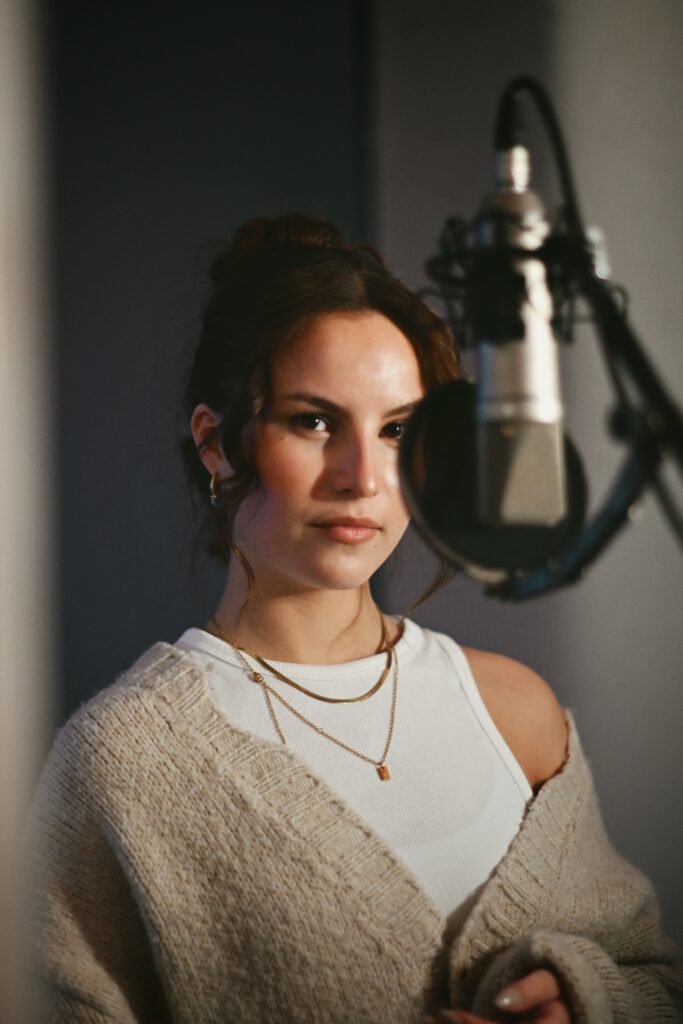
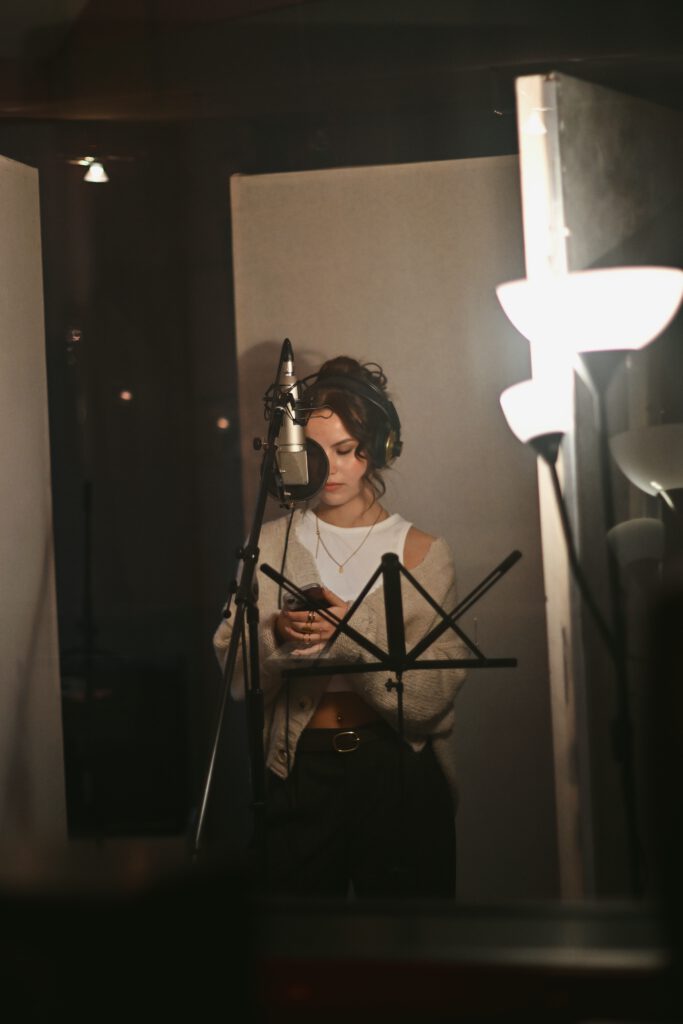
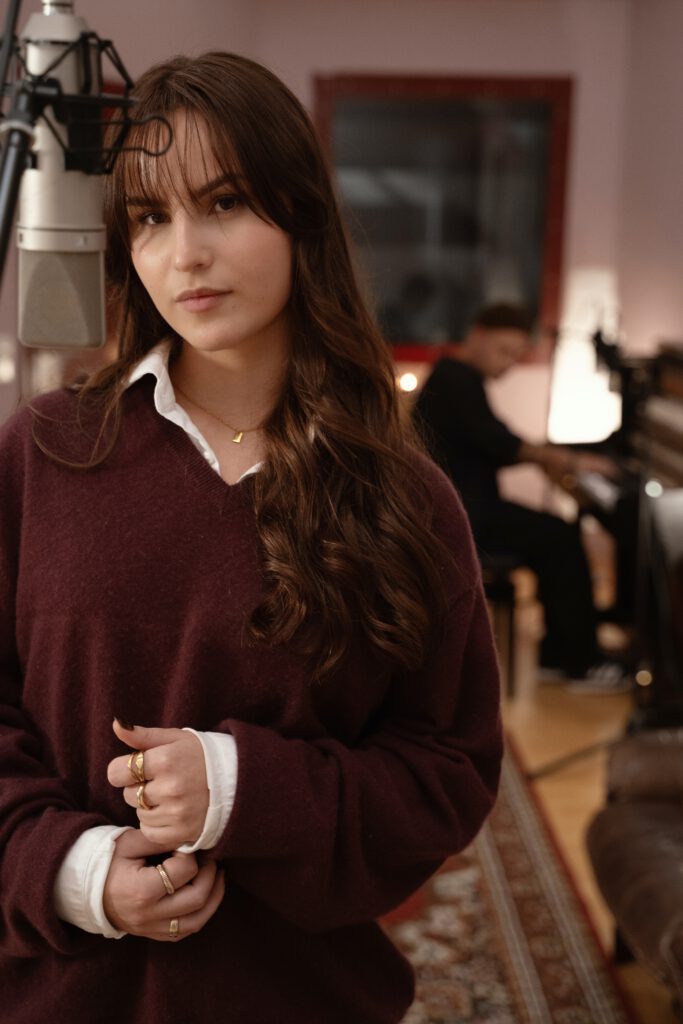
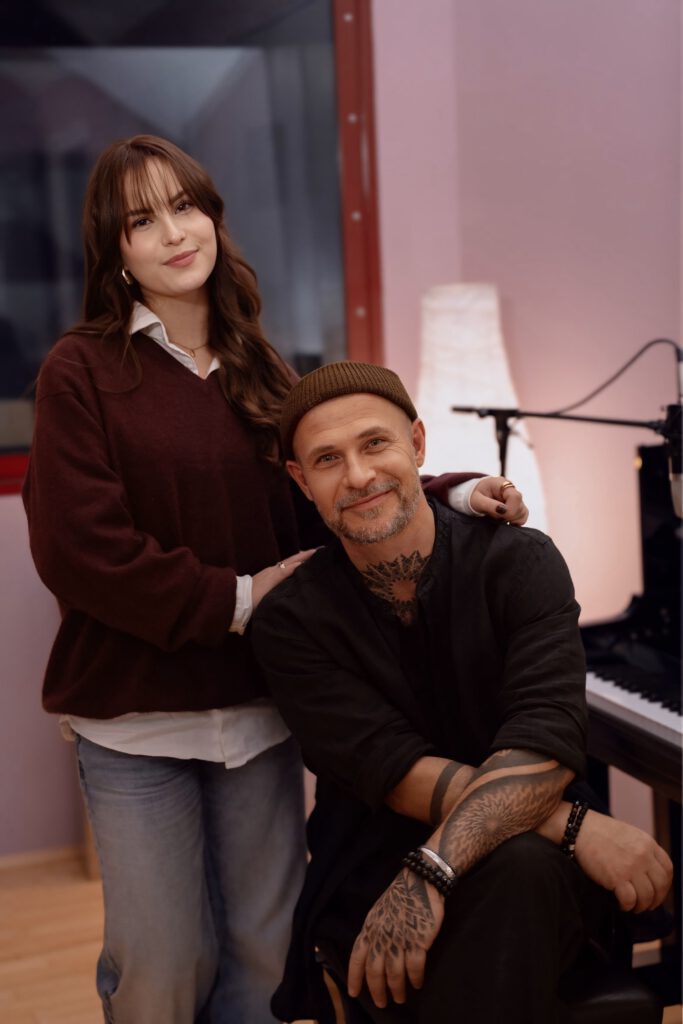
Meerle: The song ideas come from me, and I also write my lyrics completely on my own. For melodies and instruments, I usually bring an initial idea into the studio. My father takes those ideas and develops them further. He polishes the arrangement, plays the instruments, records, and handles the entire production.
So he takes care of a lot of the technical and musical execution, while I’m mainly responsible for the content and emotional foundation. Still, it’s a shared process: we’re always talking and developing the songs together.
We actually rarely disagree. When it comes to production or mix decisions, I trust him a lot, because he has the experience and knows exactly how to translate my vision in the best possible way. I’m still at the very beginning, and I mainly want to learn and gain experience.
I’m incredibly grateful that I get to walk this path with my father. He takes on so much and supports me in everything—musically and as a person. I truly couldn’t imagine anyone better to share my musical journey with. 🙂
Q: How much influence do you have on sound and production yourself? Which decisions do you make very consciously (e.g., tempo, tone colors, instruments, vocal aesthetic, space/reverb)—and where do you like being guided?
Meerle: Recording the vocals is completely on me at first. I decide how I want to sing something, what mood I want to convey, and I have pretty clear ideas of how it should sound in the end. I also have a good sense of what feels right for me.
When it comes to the instruments and the overall sound, the decisions are more on my father. He handles the arrangement, chooses tone colors, and takes care of production and everything technical behind it.
Of course, he also supports me vocally when I’m unsure—for example with the key, or when it comes to how fast or calm something should be sung. But he always lets me try things first and feel my way into it. And only when I notice I’m stuck or need feedback does he give me advice. So I have a lot of influence especially on my voice and the emotional direction, and I get to experiment freely there. For sound and production, I’m happy to be guided, because I know he has the experience to realize my ideas so that in the end it sounds exactly the way I imagine it.
Produktion & Zusammenarbeit
Q: Wie ist die Zusammenarbeit mit deinem Vater konkret organisiert? Welche Rollen nehmt ihr ein (Songidee, Arrangement, Recording, Produktion, Mix-Entscheidungen) — und wie trefft ihr Entscheidungen, wenn ihr unterschiedlicher Meinung seid?
Meerle: Die Songideen kommen von mir, und auch meine Texte schreibe ich komplett selbst. Bei den Melodien und Instrumenten bringe ich meistens eine erste Idee mit ins Studio. Mein Vater nimmt diese Ideen dann und arbeitet sie weiter aus. Er perfektioniert das Arrangement, übernimmt das Einspielen der Instrumente, das Recording und die komplette Produktion.
Er kümmert sich also viel um die technische und musikalische Ausarbeitung, während ich vor allem für die inhaltliche und emotionale Basis zuständig bin. Trotzdem ist es ein gemeinsamer Prozess: Wir tauschen uns immer aus und entwickeln die Songs zusammen weiter.
Meinungsverschiedenheiten haben wir tatsächlich selten. Wenn es um Produktions- oder Mix-Entscheidungen geht, vertraue ich ihm sehr, weil er einfach die Erfahrung hat und genau weiß, wie er meine Vorstellungen bestmöglich umsetzt. Ich stehe ja noch ganz am Anfang und möchte vor allem lernen und Erfahrungen sammeln.
Ich bin unglaublich dankbar, dass ich diesen Weg mit meinem Vater gehen darf. Er übernimmt wahnsinnig viel und unterstützt mich in allem, musikalisch wie menschlich. Ich könnte mir wirklich niemanden besseren vorstellen, um gemeinsam meinen musikalischen Weg zu gehen.:)
Q: Wie viel Einfluss hast du selbst auf Sound und Produktion? Welche Entscheidungen triffst du sehr bewusst (z.B. Tempo, Klangfarben, Instrumente, Vocal-Ästhetik, Raum/Hall) — und wo lässt du dich gern führen?
Meerle: Das Einsingen liegt erst mal komplett bei mir. Ich entscheide selbst, wie ich etwas singen möchte, welche Stimmung ich transportieren will, und habe dabei auch ziemlich genaue Vorstellungen, wie es sich am Ende anhören soll. Ich habe auch ein gutes Gefühl dafür, was sich für mich richtig anfühlt.
Bei den Instrumenten und dem generellen Sound liegt die Entscheidung dann eher bei meinem Vater. Er übernimmt das Arrangement, wählt Klangfarben aus und kümmert sich um Produktion und alles Technische dahinter.
Natürlich unterstützt er mich auch stimmlich, wenn ich unsicher bin, zum Beispiel bei der Tonart oder wenn es darum geht, wie schnell oder ruhig etwas gesungen werden sollte. Er lässt mich aber immer zuerst ausprobieren und reinfühlen. Und erst wenn ich merke, dass ich nicht weiterkomme oder Feedback brauche, gibt er mir Ratschläge.
Ich habe also vor allem auf meine Stimme und die emotionale Richtung großen Einfluss und darf mich da komplett ausprobieren. Beim Sound und der Produktion lasse ich mich gerne führen, weil ich weiß, dass er die Erfahrung hat, meine Vorstellungen so umzusetzen, dass sie am Ende genau so klingen, wie ich sie mir wünsche.
Influences & Finishing
Q: What music truly inspires you right now—not just as a reference, but emotionally? Are there artists/songs where you think, “I want to be that honest,” or “That’s what spaciousness should feel like”?
Meerle: I like listening to artists where I can analyze the lyrics and understand what they really want to say. I love it when music is genuinely emotional and people show how they feel.
Artists like Berq, Provinz, or Ivo Martin have lyrics that are emotional, meaningful, and relatable. When I listen to their words, I feel emotionally inspired because they express something through their lyrics.
I love when I listen to songs and can immediately identify with them. And that’s ultimately what I want from my own music: that people can really feel what I’m singing, and feel understood.
Q: When you finish a song, what do you feel in the first few minutes afterward—relief, emptiness, pride, fear, anticipation, or something else? And how do you know: “Don’t tweak it anymore—let it go now.”?
Meerle: First of all, it’s definitely relief and a lot of joy that something you’ve worked on for a long time—and that may have been on your mind for a long time—is finally finished.
I also always feel a bit nervous about releasing a song, because you never know how it will be received. You think a lot about what people will say, and whether it will come across to others the way you hope.
Still, I’m proud when a song is finished, because it means you’ve taken another step—even if you weren’t 100% sure about everything the whole time.
Because I’m very perfectionistic, I like to hand off the final polish, otherwise I keep finding little things that bother me. I also have to be careful not to listen to my own songs too often before the release—because then I start to feel unsure and notice things I could have done better.
Now I know: when a song is finished and I’m satisfied once, then it really is finished. Then I should stop looking for mistakes and just be happy—and look forward to the release.
Einflüsse & Fertigwerden
Q: Welche Musik inspiriert dich gerade wirklich — nicht nur als Referenz, sondern emotional? Gibt es Artists/Songs, bei denen du denkst: „So ehrlich möchte ich auch sein“ oder „So soll sich Weite anfühlen“?
Meerle: Ich höre gerne Artists, bei denen ich in den Texten analysieren kann, was sie wirklich sagen wollen. Ich mag es sehr, wenn Musik wirklich emotional ist und man auch zeigt, wie man fühlt.
Künstler wie Berq, Provinz oder Ivo Martin haben Texte, die emotional, wichtig und nachvollziehbar sind. Wenn ich die Texte dieser Künstler höre, bin ich emotional sehr inspiriert, weil sie mit ihren Lyrics etwas ausdrücken.
Ich liebe es, wenn ich mir Songs anhöre und mich sofort damit identifizieren kann. Genau das ist es am Ende auch, was ich mir von meiner Musik wünsche: dass die Leute wirklich fühlen können, was ich singe, und sich verstanden fühlen.
Q: Wenn du einen Song fertig hast: Was fühlst du in den ersten Minuten danach? Eher Erleichterung, Leere, Stolz, Angst, Vorfreude — oder etwas ganz anderes? Und woran merkst du: „Jetzt nicht weiter drehen — jetzt loslassen.“?
Meerle: Es ist auf jeden Fall erst mal eine Erleichterung und große Freude, dass etwas, an dem man lange gearbeitet hat und einen vielleicht auch schon lange beschäftigt hat, nun endlich fertig geworden ist.
Auf jeden Fall habe ich auch immer ein bisschen Sorge davor, ein Lied herauszubringen, weil man nie weiß, wie etwas ankommt. Man macht sich viele Gedanken darüber, was Leute dazu sagen und ob es auf andere so wirkt, wie man es sich wünscht.
Trotzdem bin ich stolz, wenn ein Song fertig ist, weil man einen weiteren Schritt gegangen ist, auch wenn man sich vielleicht nicht immer zu 100% mit allem sicher war.
Da ich sehr perfektionistisch bin, gebe ich den letzten Feinschliff dann gerne noch mal ab, weil ich sonst immer wieder Kleinigkeiten finde, die mich stören. Außerdem muss ich immer sehr darauf achten, meine eigenen Lieder vor dem Release nicht zu oft zu hören, weil ich sonst unsicher werde und mir oft Dinge auffallen, die ich hätte besser machen können. Jetzt weiß ich: Wenn ein Lied einmal fertig ist und ich einmal zufrieden bin, dann ist es wirklich fertig. Dann sollte ich aufhören, Fehler zu suchen, sondern einfach glücklich sein und mich auf den Release freuen.
Staying With It & Looking Ahead
Q: There’s that early moment for newcomers where suddenly everything seems possible—and at the same time self-doubt shows up. What does that tension look like for you, and what helps you keep going anyway?
Meerle: When I realized my first song was being received well, it was a huge high. I got so much kind feedback—messages, support, and words from people I never would have expected. That motivated me a lot.
But when that first wave slowly fades, it can also feel intimidating—especially when you realize how much work and heart goes into a release. In those moments, self-doubt definitely comes up for me. I’m very self-critical and often compare myself to other artists. Then I quickly think there’s still more to do, and that I’m really just at the beginning.
But maybe that’s exactly my motivation. I’m at the beginning, and I’m allowed to be “imperfect.” My goal is to get better and keep developing. And for that, there has to be room to grow. If everything were perfect already, there would be no space left to grow.
I think this tension between euphoria and self-doubt will accompany me in future releases as well. And that’s okay. It shows me how important it all is to me—what people feel through my music, and whether they see themselves in it. And that’s exactly what ultimately drives me to keep going.
Q: Where does your inspiration come from outside of music? (Places, people, conversations, books, films, nature—maybe the ocean, too.) And how do you notice when inspiration actually wants to become a song?
Meerle: I find inspiration mainly in deep conversations with other people. When we talk about things that truly occupy us, I often notice they’re topics that are much bigger than just my own thoughts. You gain new perspectives, other opinions, other experiences—and suddenly I see something in a completely different way. In moments like that, the impulse to write about it often appears.
Books inspire me, too. I love reading. Often I’ll read a sentence—sometimes even just a single word—and I’ll think about it for a while. If it won’t let me go, I usually notice quickly whether I could write about it.
The ocean is a magical place for me—probably the place where I’m happiest. Just the sound of the waves helps me think clearly, which gives me an incredible amount of space to write my lyrics. The ocean shows me a kind of infinity—that there’s nothing that isn’t possible. So it’s not only inspiration for my lyrics, but also a huge motivation to keep making music and releasing it at all.
But more than anything, I’m inspired by one person: my dad. He’s my biggest musical role model, because I see how he lives and loves music. He has experience and an instinct for music that really impresses me. How effortlessly music comes to him and how deeply he feels it—that’s exactly what I wish for myself, too.
I can tell inspiration really wants to become a song when a thought won’t let me go. When I start forming sentences in my head or feel the need to write something down right away. Or when there’s already a melody in my mind and suddenly everything comes together.
Q: What do you want people to find in your songs—comfort, clarity, a mirror, courage, closeness? And when do you know: “Yes, it landed.”?
Meerle: I want people to feel understood through my songs—to know they’re not alone with their feelings or thoughts. I know that feeling very well myself: when I hear music and realize someone is saying exactly what I’m feeling, it gives me so much. That’s exactly what I want for the listeners of my songs.
I think what I want most is a mix of comfort and a mirror—that you simply recognize yourself in my lyrics, in my music. And that you realize: my feelings are okay, I’m not “too much” or “too sensitive.”
I know it has landed when I get messages or comments where someone writes that a song triggered something in them. When someone tells me they felt the way my song sounds—that’s honestly the biggest thing I can achieve, because it means I was able to evoke emotion in another person.
Q: If you look one year ahead, what would you like to have experienced—musically and personally? (For example a certain kind of song, a release goal, a collaboration, a learning moment.)
Meerle: When I look one year ahead, what I want most is to have grown—musically and personally. I’d like to be able to say I’ve become braver: braver in my lyrics, even more honest, maybe more direct in what I’m saying.
Musically, I’d love to release a song that shows a new side of me again. Maybe something that dares to become bigger—or, on the contrary, even more reduced and vulnerable. Simply a song where I can say: I wouldn’t have dared to do that a year ago.
Of course I also hope for more releases. And most importantly, I want to keep learning—in the studio, in writing, in recording vocals. To feel more confident in what I’m doing.
If, one year from now, I look back and realize I’ve grown a bit—and still kept my authenticity—that would be the most beautiful thing for me.
Dranbleiben & Ausblick
Q: Es gibt diesen Start-Moment bei Newcomern, wo plötzlich alles möglich scheint — und gleichzeitig tauchen Selbstzweifel auf. Wie sieht dieses Spannungsfeld bei dir aus, und was hilft dir, trotzdem weiterzumachen?
Meerle: Als ich gemerkt habe, dass mein erstes Lied gut ankommt, war das ein totales Hochgefühl. Ich habe so viel liebes Feedback bekommen, Nachrichten, Unterstützung und Worte von Menschen, bei denen ich es niemals erwartet hätte. Das hat mich schon sehr motiviert.
Wenn diese erste Welle dann langsam abflacht, kann es aber auch einschüchternd werden. Vor allem, wenn man realisiert, wie viel Arbeit und Herzblut in so einem Release steckt. In solchen Momenten kommen bei mir auf jeden Fall auch Selbstzweifel hoch. Ich bin sehr selbstkritisch und vergleiche mich oft mit anderen Artists. Dann denke ich schnell, dass da noch mehr geht und dass ich eigentlich noch ganz am Anfang stehe.
Aber vielleicht ist genau das auch meine Motivation. Ich stehe am Anfang und ich darf „unperfekt“ sein. Mein Ziel ist es, besser zu werden und mich weiterzuentwickeln. Und dafür muss es ja auch noch Luft nach oben geben. Wenn jetzt schon alles perfekt wäre, gäbe es keinen Raum mehr zu wachsen.
Ich glaube, dieses Spannungsfeld zwischen Euphorie und Selbstzweifel wird mich auch bei zukünftigen Releases begleiten. Aber das ist okay. Es zeigt mir ja auch, wie wichtig mir das alles ist, was Menschen durch meine Musik fühlen und ob sie sich darin wiederfinden. Und genau das treibt mich am Ende an, weiterzumachen.
Q: Woher kommt deine Inspiration außerhalb von Musik? (Orte, Menschen, Gespräche, Bücher, Filme, Natur — vielleicht auch das Meer.) Und wie merkst du, dass aus Inspiration wirklich ein Song werden will?
Meerle: Inspiration finde ich vor allem in tiefen Gesprächen mit anderen Menschen. Wenn wir über Dinge sprechen, die uns wirklich beschäftigen, merke ich oft, dass es Themen sind, die viel größer sind als nur meine eigenen Gedanken. Man bekommt neue Perspektiven, andere Meinungen, andere Erfahrungen und plötzlich schaue ich selbst nochmal ganz anders auf etwas. Genau in solchen Momenten entsteht oft der Impuls, darüber schreiben zu wollen.
Auch Bücher inspirieren mich. Ich lese sehr gerne. Oft lese ich einen Satz, manchmal reicht auch nur ein Wort, und ich muss eine Zeit darüber nachdenken. Wenn es mich nicht mehr loslässt, merke ich eigentlich schnell, ob ich darüber schreiben könnte.
Das Meer ist für mich ein magischer Ort. Vermutlich der Ort, an dem ich am liebsten bin. Allein das Rauschen der Wellen lässt mich klar denken, was mir unglaublich viel Raum für das Schreiben meiner Texte lässt. Das Meer zeigt mir eine Art Unendlichkeit. Dass da nichts ist, was nicht geht. Dadurch ist es nicht nur eine Inspiration für meine Texte, sondern auch eine große Motivation, überhaupt weiter Musik zu machen und zu veröffentlichen.
Am allermeisten werde ich aber auf jeden Fall von einer Person inspiriert: meinem Papa. Ich sehe in ihm mein größtes musikalisches Vorbild, weil ich sehe, wie er Musik lebt und liebt. Er hat die Erfahrung und ein Gespür für Musik, das mich sehr beeindruckt. Wie leicht ihm Musik fällt und wie sehr er sie spürt – genau das wünsche ich mir auch für mich.
Ich merke, dass aus Inspiration wirklich ein Song werden will, wenn mich ein Gedanke nicht mehr loslässt. Wenn ich anfange, Sätze im Kopf zu formen oder das Bedürfnis habe, sofort etwas aufzuschreiben. Auch wenn da schon eine Melodie im Kopf ist und alles plötzlich zusammenfindet.
Q: Was möchtest du, dass Menschen in deinen Songs finden — eher Trost, Klarheit, Spiegel, Mut, Nähe? Und wann weißt du: „Ja, das ist angekommen“?
Meerle: Ich möchte, dass Menschen sich durch meine Lieder verstanden fühlen. Dass sie wissen, dass sie mit ihren Gefühlen oder Gedanken nicht allein sind. Ich kenne das selbst sehr gut, wenn ich Musik höre und merke, da spricht jemand genau das aus, was ich fühle, dann gibt mir das unglaublich viel. Genau dieses Gefühl wünsche ich mir auch für die Hörer*innen meiner Songs.
Ich glaube, was ich mir am meisten wünsche, ist eine Mischung aus Trost und Spiegel. Dass man sich einfach in meinen Texten, in meiner Musik wiederfindet. Dass man auch merkt: Meine Gefühle sind okay, ich bin nicht „zu viel“ oder „zu sensibel“.
Ich weiß, dass es angekommen ist, wenn ich Nachrichten oder Kommentare bekomme, in denen mir jemand schreibt, dass ein Song etwas in ihm oder ihr ausgelöst hat. Wenn mir eine Person sagt, dass sie sich so gefühlt hat, wie sich mein Lied anhört, ist das eigentlich das Größte, was ich erreichen kann – weil ich bei anderen Menschen Emotionen wecken konnte.
Q: Wenn du ein Jahr nach vorn schaust: Was würdest du gern erlebt haben — musikalisch und persönlich? (z.B. eine bestimmte Art von Song, ein Release-Ziel, eine Zusammenarbeit, ein Lernmoment).
Meerle: Wenn ich ein Jahr nach vorn schaue, wünsche ich mir vor allem, gewachsen zu sein. Musikalisch und persönlich. Ich würde gern sagen können, dass ich mutiger geworden bin. Mutiger in meinen Texten, noch ehrlicher, vielleicht auch direkter in dem, was ich ausspreche.
Musikalisch würde ich gerne einen Song veröffentlichen, der noch mal eine neue Seite von mir zeigt. Vielleicht etwas, das sich traut, größer zu werden oder im Gegenteil noch reduzierter und verletzlicher ist. Einfach ein Lied, bei dem ich merke: Das hätte ich mich vor einem Jahr noch nicht getraut.
Ich wünsche mir natürlich auch weitere Releases, und ganz wichtig ist mir, dass ich dazulerne – im Studio, beim Schreiben, beim Einsingen. Dass ich sicherer werde in dem, was ich tue.
Wenn ich in einem Jahr zurückblicke und merke: Ich bin ein Stück gewachsen und habe trotzdem meine Echtheit behalten, dann wäre das für mich das Schönste.