Mattiaca creates spacious ambient and neoclassical music that invites listeners into states of stillness, memory, and quiet wonder — and Vela Nebulae is a refined snapshot of where Matthias Sauer’s poetic, felt-piano-led world is right now.
The Interview
Introduction
Q: For people discovering Mattiaca for the first time: how would you describe this project in your own words, and what does it allow you to express that feels different from your broader musical life as Matthias Sauer?
Mattiaca: Mattiaca is, first and foremost, simply a new playground for me within the genres of ambient and neoclassical music. For more than 20 years, I mainly released tracks in the chillout sphere — under various pseudonyms — and since 2022, I have also been publishing works in the popular solo piano category. While I will continue to present piano pieces under the almost real-name identity of Matt(hias) Sour, Mattiaca is conceived in a much more open way in terms of both instrumentation and stylistic direction. The difference compared to my other projects is therefore more theoretical in nature. I’m quite certain that Mattiaca still carries my personal artistic signature very clearly.
Q: Does the project name have a particular meaning?
Mattiaca: Actually, Mattiaca is not simply an invented name. It refers to a Germanic tribe that lived in and around Wiesbaden during Roman times. Anyone visiting the Hessian capital today will still come across traces of the Mattiaci. In that sense, the project represents a certain feeling of home for me. I’ve been living in Wiesbaden-Biebrich for more than 25 years — a place once associated with Richard Wagner, and where the instrument maker Heckel is still based today. Many impulses for new projects emerge directly from the atmosphere of the city of the Mattiaci. That is also why most of the titles are in Latin, such as Vela Nebulae.
Q: Your path stretches from sound design and preset creation to journalism, artist releases, and multiple musical identities. Looking back, what were the key turning points that shaped your relationship with music — and when did Mattiaca become a necessary space for you?
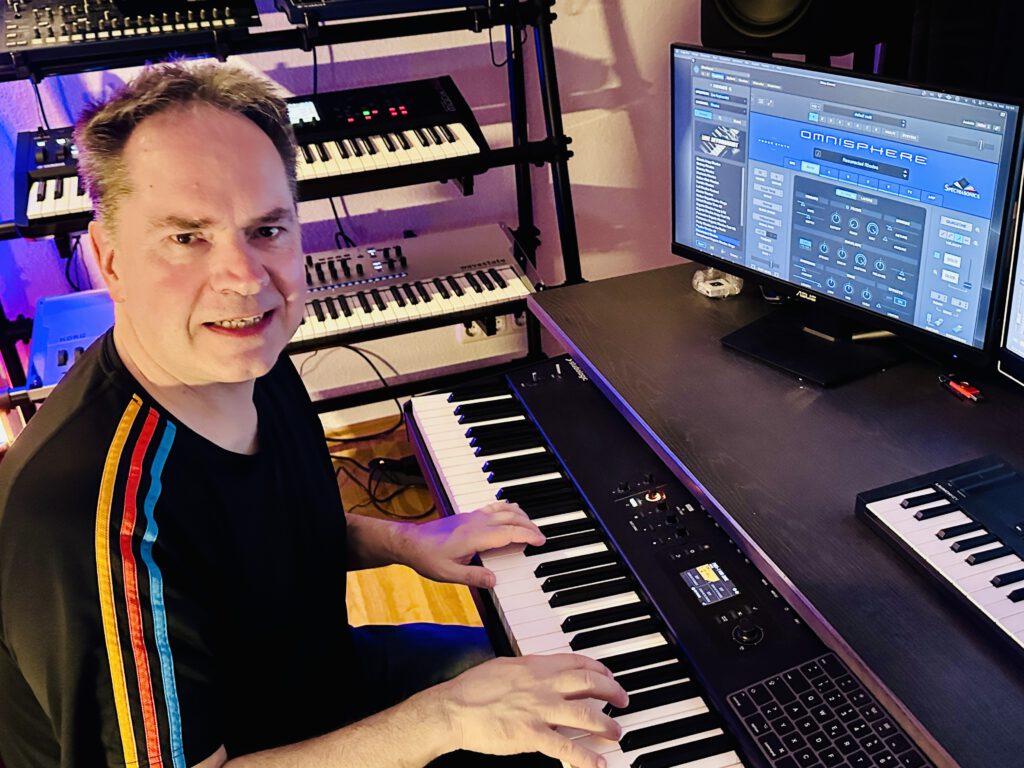
Mattiaca: I could probably spend an entire evening talking about that — with plenty of funny anecdotes along the way. But in short, my fascination with making music and electronic sounds began when I was around twelve years old. At eighteen, I bought my first synthesizer, a used SCI Prophet-600, and together with a Yamaha DX7, I used it in several bands while gaining my first experiences with subtractive synthesis. Originally, all I really wanted was to make music. But through a series of coincidences, I ended up working in the 1990s for Yamaha as well as Easy Sounds — creating libraries, tutorials, and demos. At some point, however, I felt the urge to focus more on actual music production again, because sound design alone often feels like only one component rather than complete artistic fulfillment. Later on, especially during the COVID pandemic, synthesizer programming became important to me again, and I still offer presets through App-Sound today. At the same time, I have always written articles for magazines, and for the past five years, especially for the online magazine Bonedo. Since journalism constantly revolves around current topics, this work has become a major source of inspiration for my own music production. You discover new trends, new instruments, and new plugins that I immediately want to explore, often becoming part of future Mattiaca releases.
Latest Work
Q: Vela Nebulae sits in a sensitive space between ambient and neoclassical music. How would you describe this release in your own words — and where does it sit in your artistic evolution right now?
Mattiaca: Describing my own work is always difficult. I would probably end up approaching it too academically or musicologically, while in reality, the piece emerged very intuitively and emotionally. I allowed myself to be guided by a chord progression first, and only later developed the actual theme around it. For many listeners, the piano part may feel too repetitive, mechanical, or even monotonous — but that is entirely intentional. The minimalism is meant to create a certain emotional tension and space within the composition. For me, this track represents a kind of transitional step. The minimalist neoclassical piano forms the structural foundation, while the additional atmospheric textures already point toward future Mattiaca releases, which I imagine becoming a little more experimental, adventurous, and stylistically open.
Q: The titles and atmosphere suggest memory, distance, stillness, and cosmic movement. What emotional or conceptual thread did you keep returning to while creating Vela Nebulae and Sphaerae Veterum Temporum?
Mattiaca: The original idea and the final sonic result are actually very closely connected. I wanted to move away from the typical sound of an acoustic piano and instead paint images such as white clouds, snowy landscapes, or astronomical nebulae through instrumental textures and atmospheres. With the second piece of the single, Sphaerae Veterum Temporum, I consciously stayed much closer to the traditional piano sound. However, the same sense of floating rhythmic monotony can still be felt there as well.
Creative Approach
Q: Your work often combines technical depth with emotional restraint. How did you approach the creative process for this release — and did Mattiaca ask something different from you than your other projects do?
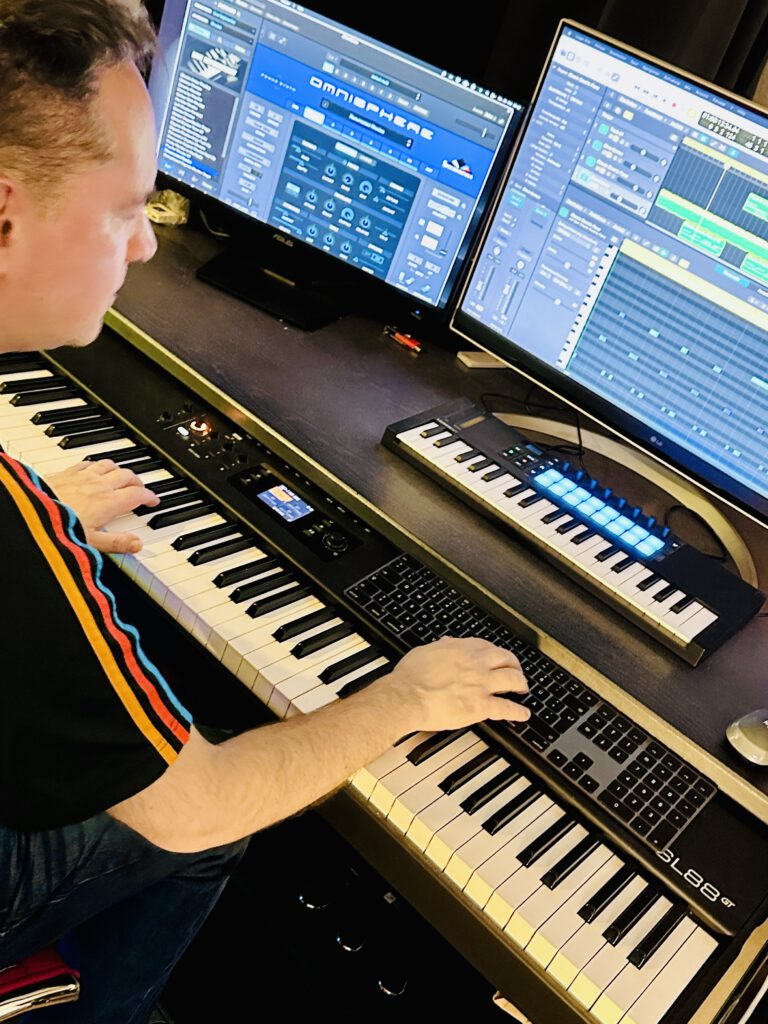
Mattiaca: As mentioned, I already had a fairly clear image in mind for Vela Nebulae. That is usually not the case for me — I much prefer to experiment and let chance inspire me along the way. In that sense, this Mattiaca single was produced differently: more piano-based, more purposeful, and with a stronger focus on harmonic development. I surprisingly spent very little time on sound design for Vela Nebulae, even though that is something I’m usually drawn to (laughs).
Personal & Creativity
Q: When you’re not making music, what tends to refuel your creativity most — nature, visual impressions, synth exploration, reading, silence, or something else?
Mattiaca: First of all, reading and silence aren’t really my thing, even though you might assume that. I’d also like to expand the question a bit: are we talking about passive or active inspiration? In other words, are there random moments that you later turn into creative material, or is it more about consciously thinking through creativity and possible projects? For me, both approaches blend together. I might be working with a new sound library and stumble across ideas by accident. Or I’ll go for a walk, usually just around the city, and suddenly have these rather strange, abstract thoughts. Unfortunately, once I’m in the studio, I often notice that the ideas in my head don’t quite translate into the DAW. I also don’t tend to record melodies on my phone to develop later. In the end, my creativity mostly happens inside the studio walls.
Q: You work across very different roles and formats. Do you have a routine, ritual, or working rhythm that helps you stay inspired and move between technical craft and more inward musical states?
Mattiaca: It’s no secret, and in practice, it’s actually very effective: I set clear deadlines. If I finish by a predetermined date, great. If not, I cancel the track. Necessity breeds invention, especially under time pressure. Without a clear schedule and daily structure, I would completely sink into endless chaos. Of course, there are also projects that require a lot of time, but you shouldn’t get stuck in the details.
Q: How do you deal with creative blocks, self-doubt, or periods when a piece resists becoming what you hoped it could be?
Mattiaca: I actually rarely experience creative blocks — somehow, ideas always come to me. Whether they all necessarily need to be released is another question. Otherwise, I try more and more to accept compromises. The “perfect” piece of music hardly exists, and I don’t feel the need to please every critic. This consciously simple attitude makes many things easier in the role of a producer.
Inspiration & Listening
Q: With your background in sound design, journalism, and your own releases, you’re exposed to a huge range of music and tools. Which artists, albums, or non-musical influences have inspired you most recently — and why?
Mattiaca: I might make myself slightly unpopular with this answer: I’m actually not someone who likes to copy existing music — not even in the smallest fragments. Of course, I enjoy listening to and appreciating the work of well-known artists in the neoclassical and ambient scenes, but I always try to find my own path instead. Imitation can often lead to quicker success, but for me it’s important to avoid that route and develop something that feels genuinely personal and independent.
Creative Philosophy & Vision
Q: Mattiaca feels reduced, calm, and carefully shaped — yet there is a lot of depth inside that restraint. What role do experimentation and risk-taking still play in your music today?
Mattiaca: A very important one, in fact. Above all, my main interest is to discover new things. As I mentioned earlier, rather than consciously imitating popular pieces, I prefer to experiment with my own sonic preferences. However, the level of risk involved is ultimately quite limited, since I tend to “smooth out” the arrangements, so to speak. Mattiaca will never become overly avant-garde in its direction.
Q: If there were no limits — no budget, deadlines, or technical restrictions — what kind of dream project would you love to create under Mattiaca or one of your other musical identities?
Mattiaca: All people live within boundaries, including artists. I’m not really interested in constructing some arbitrary dream world. My music almost always has a concrete, often regional connection to everyday life. Even when I lean more strongly into imagination, the music still remains grounded in something real and emotionally tangible.
From Silence to Sound – Creative Identity
Q: I often explore how personal decisions shape a musician’s signature sound. In your case, which choices most strongly define the sound of Mattiaca — your piano writing, your synth textures, your sense of space, your production discipline, or something else?
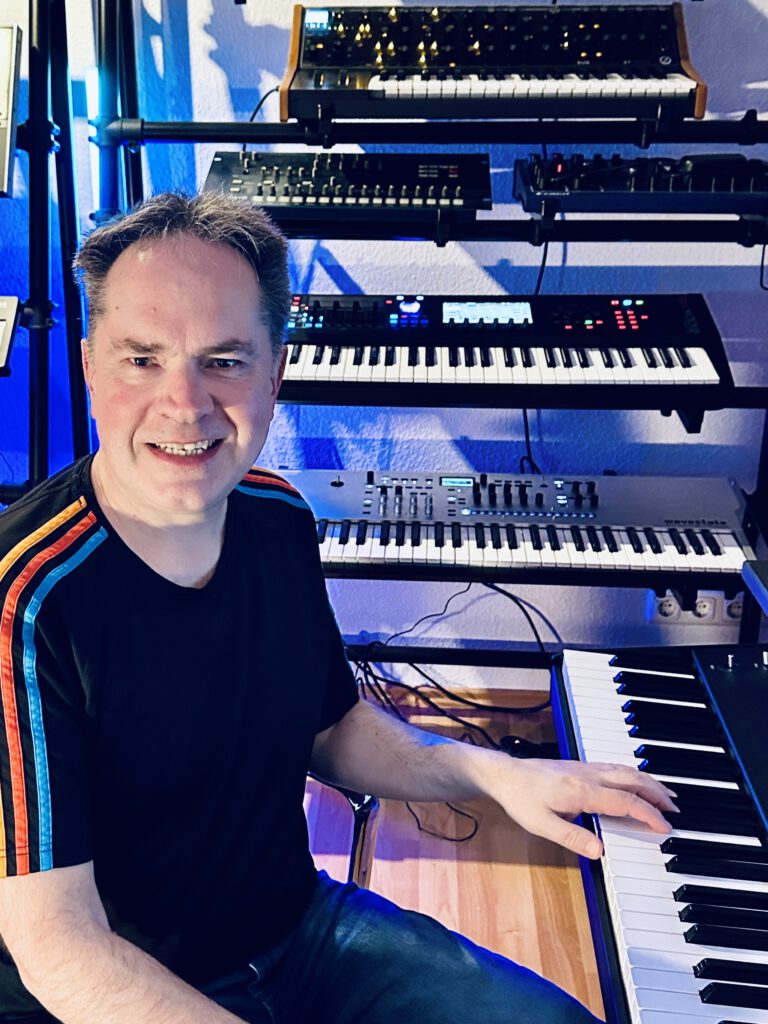
Mattiaca: The sound of Mattiaca is defined by a deliberately colorful mix of felt piano, electric piano, and soundscapes. In the early releases, the piano clearly takes the lead — I grew up with the acoustic piano, I think, as a pianist, and for me it remains the most direct instrument for translating emotions into music. At the same time, because of my strong affinity for synth pads and arpeggios, I don’t want the piano to stand out in Mattiaca’s sound world.
Q: Looking back, what have been the most important turning points in your creative journey — moments that changed how you make music, listen, or understand your own artistic voice?
Mattiaca: I don’t really see distinct turning points; rather, it has developed in a continuous flow, with certain sound-related preferences coming and going over time. The changes have mostly been driven by the available technical tools. Even just the vast range of reverb and other effect plugins alone is already a strong reason why producing more ambient and similarly atmospheric music feels so natural today.
Closing
Q: What do you hope listeners feel or take away when they spend time with Vela Nebulae?
Mattiaca: In essence, I don’t really expect or hope for anything specific. If it provides three minutes of acoustic relaxation, or perhaps sparks a little curiosity to explore more Mattiaca tracks, that’s already more than enough. However, I hope that both piano and electronic music listeners feel equally addressed and don’t immediately dismiss the deliberately minimal structure.
Q: Because so much of your work moves between craft and sensitivity, what advice would you give to someone at the beginning of their creative journey who wants to build both a distinctive sound and a lasting creative practice?
Mattiaca: I’m very happy to give advice. In the end, it’s often quite simple things that beginners should keep in mind: you need a great deal of patience and an enormous amount of passion, more important than exceptional talent. So never give up. It’s also important not to place too much weight on other people’s opinions; you have to do your own thing. Especially in the age of artificial intelligence, every human idea and form of expression is a blessing — it’s all about personality.
Q: Finally, what’s next for you — whether as Mattiaca or elsewhere in your wider creative world? What should we be looking forward to?
Mattiaca: In fact, the best is yet to come: Mattiaca is still a very young project, and I already have several new ideas that I plan to realize more concretely this year or next. I would be delighted if friends, colleagues, and listeners in general continue to follow this musical journey. As it is usually better not to go into too much detail about upcoming work, I would rather leave it at that and sincerely thank you for this interview!