Christoph Sebastian Pabst creates melodic, place-inspired electronica where deep-house pulse meets ambient air—music that turns landscape, memory, and motion into warm, emotionally direct sound.
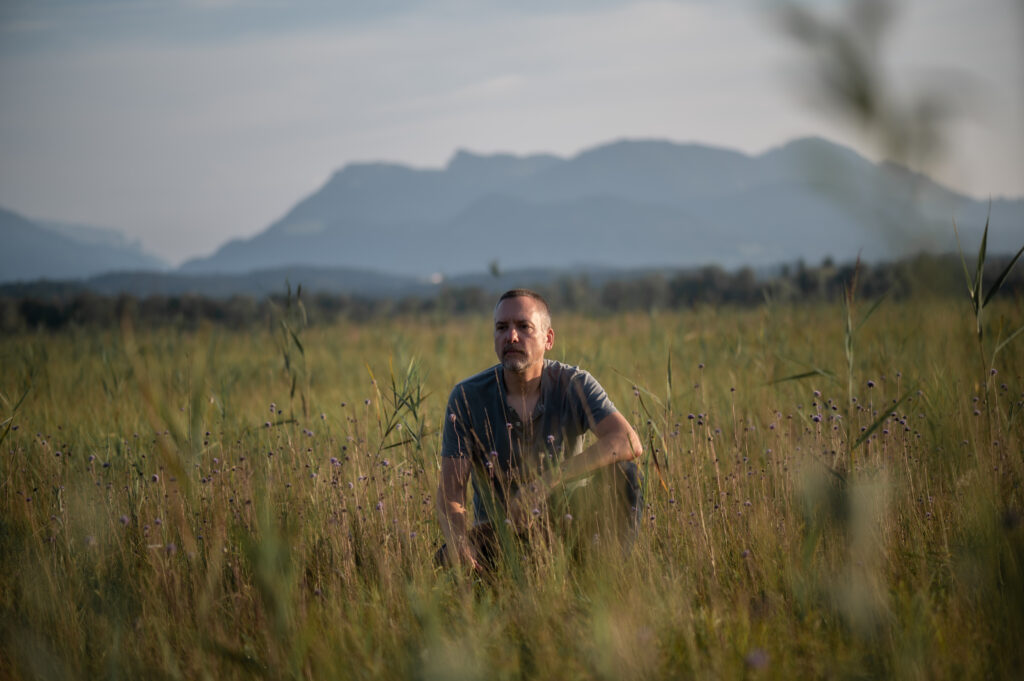
The Interview
Introduction
Q: For those who don’t know you yet: how would you describe yourself as an artist in a few sentences—and what kind of emotional space do you want your music to open for listeners?
Christoph: I see myself as a producer and artist who is fundamentally free and independent. While I try to maintain a certain artistic line, my influences are quite diverse. If you stream my music, you might not always find a single “red thread” because I move between Ambient, Neoclassical, Chillout, Downbeat, and Deep House. But for me, it is always about a feeling, a specific emotion that is present the moment I create. It can range from deep melancholy to pure happiness. Honestly, I don’t even feel like a musician in the traditional sense, as I haven’t mastered any instrument. I wouldn’t belong on a stage, unless it was just to turn a cutoff knob or slide an envelope. I’m a creator of moods.
Q: Your journey includes phases of growth, a longer pause, and a strong return with a clear identity. What was your path into music like—was there a defining moment when you knew you wanted to create your own worlds through sound?
Christoph: I fell in love with pianos and keyboards very early on. My sister took lessons on an upright piano at home, and whenever it was free, I would sit down and improvise. I never had formal lessons; to me, sheet music looks like hieroglyphics.
In the early 90s, the Amiga 500 opened the door to electronic music for me. I was the first in my circle with an 8-bit sampler, playing sounds via the computer keyboard using a 4-track tracker. Eventually, I built a full studio in my basement with legendary gear like the MS-20, Juno 60, and TB-303. But back then, I didn’t truly understand the technical side of production, the sound was often muddy. After a brief stint releasing Disco House on vinyl and later moving away for my medical studies and starting a family, music faded into the background for years.
The turning point came years later while I was traveling as a locum doctor. I rediscovered my old ideas and felt it was a tragedy to let them be forgotten. I sent them to you, Thomas — we had met years earlier through a classified ad — and that spark led to our first song, Pastellstrand, and to our albums Meerblick and Bergblick. That return to music felt like coming home.
Latest Work
Q: How did the Chiemgau region shape “Chiemgaumorgen” and “Traunnebel,” and what do you hope listeners feel when they hear them?
Christoph: Right now, I’m working on a beautiful new project with…you! That will eventually become an album. It’s inspired by the Chiemgau region where I live. The first songs, Chiemgaumorgen and Traunnebel, are quiet Ambient pieces with a Neoclassical touch. It’s music for wandering through nature, for standing by the lake or in the mountains, and simply marveling at the world. It’s best heard when you want to relax and breathe.
Q: How would you describe this release in your own words—and where does it sit in your evolution as an artist right now?
Christoph: I tend to find ideas and inspiring sounds very spontaneously. Because of my medical profession and my family, I often don’t have the time to get lost in the tiny technical details of mixing and mastering. I am incredibly grateful to you Thomas for that. You are a master of clarity and depth. You handle the final polish, the Dolby Atmos versions, and the visual side. This allows me to stay in the pure creative flow of finding that initial spark.
Q: Your work often feels connected to specific places and moods—Bavarian landscapes, lakes, mornings, islands, wide horizons. What emotional or conceptual thread did you keep returning to while making this new piece?
Christoph: The Chiemgau is a landscape of contrasts. You have wide plains and gentle hills meeting the jagged edges of the Alps and the vastness of the Lake Chiemsee. I am captivated by the reflections in the still water at sunrise, the mystery of morning fog, and that tension between vastness and limitation. It’s where reality and fantasy meet.
Creative Approach
Q: How did you approach the creative process for this project—writing, sound design, arrangement, mixing? Was it different from your earlier releases?
Christoph: My process is very intimate. I sit at my desk at night with my MacBook, my Genelec speakers, and my master keyboard. I’ll pull up a beautiful felt piano or a synth pad, add some reverb and delay, and then I just close my eyes and play. I visualize the mountains and the water, and usually, a perfect basis for a song emerges surprisingly quickly.
Q: Can you describe a moment during the creation where everything clicked—or almost fell apart? What changed the outcome in the end?
Christoph: There are dry spells, of course. Sometimes the sound is right but the melody is wrong. I’ll sleep on it, throw out everything that doesn’t resonate, and start fresh with whatever fragment felt “real.” For this Chiemgau project, focusing on Ambient has been a relief. I’ve always struggled with beats and rhythms — I often have something in my head that I can’t translate to my satisfaction. By letting the beats go, the melodies just flow out of me.
Personal & Creativity-Related
Q: Your music often feels like it’s born from place: you translate landscapes into harmony, texture, and rhythm. What does a “real location” become in your studio—chords, tempo, sound palette, silence?
Christoph: The Chiemgau is soft and warm. The sound of this place, to me, is analog and living, but never harsh. In the studio, this means the filters on my synths are never fully open; the frequencies aren’t too high. The bass has a solid foundation. It’s a slow, evolving sound — not “pure” ambient that just drifts, but something that carries a melody, blurring the lines with Neoclassical and Chillout.
Q: Your sound balances an emotional warmth with clean electronic production. Do you have a routine, ritual, or habit that helps you stay inspired (certain hours, a walking route, a first sound you always start with)—or do you thrive more on spontaneity?
Christoph: It’s almost entirely spontaneous. I need a sound that fits the exact moment. When I find a preset that moves me, I start shaping it — swapping a square wave for a sawtooth, playing with the envelope and the stereo image until it feels alive.
Q: How do you deal with creative blocks, self-doubt, or periods of silence—especially when you’re working with subtle emotions and minimal elements?
Christoph: If it’s not working, I walk away. I’ll bounce a rough idea and listen to it in the car or at breakfast. Often, the solution comes to me while I’m not at the desk, and I can’t wait to get back to it.
I’ve also consciously stepped back from social media. I found myself “killing time” by scrolling, and it didn’t feel good. I prefer the “real” silence now. True silence can be haunting at first because it forces you to face yourself, but it’s where the best ideas live.
Inspiration & Listening
Q: Which artists or albums have inspired you most recently, and why? (Harmony, groove, sound design, storytelling, restraint—anything that sparked a new idea.)
Christoph: I don’t actually listen to music around the clock — I need space for conversations and family life. But I am moved by artists like Ólafur Arnalds or Two Lanes. I admire their sense of restraint. For a while, I was fascinated by Dreamscapes — how a simple, expressive melody can feel so complete.
Q: If you could recommend one piece of music—any genre—that everyone should listen to at least once, what would it be?
Christoph: That’s hard! I grew up inspired by Vangelis and Jean-Michel Jarre, but I’d probably point toward the classics like Phil Collins, Depeche Mode or Sting. They laid the foundations for everything we do today.
Creative Philosophy & Vision
Q: Your music walks a fine line: it can be functional (focus/relax) and still emotionally meaningful. What role do experimentation and risk-taking play in your music—and where do you allow yourself to break your own “rules”?
Christoph: I don’t really have “rules” to break because I don’t think in terms of theory. I often realize after a song is finished that it isn’t in a 4/4 time signature. My project Toteles was my space for going “all over the place” experimentally, even if it wasn’t a commercial success. It was pure joy.
Q: If there were no limits—no budget, no deadlines, no technical restrictions—what would your dream creative project look like? (A concept EP tied to places, a long-form album journey, film/series scoring, immersive audio, a live setup, etc.)
Christoph: I’ve always wanted to score a film. I’ve entered competitions before, and while I didn’t always hit the “jury’s taste,” I know I could create something deeply emotional for a quiet, contemplative movie — drama, science fiction, fantasy, romance or documentary film.
From Silence to Sound – Creative Identity
Q: I often explore how personal decisions shape a musician’s signature sound. Which choices do you feel most strongly define your sound—your chord language, your relationship to groove, your instrument palette (felt piano / organic textures), your mix aesthetics, your sense of space?
Christoph: My sounds have very few overtones; I avoid harsh highs. I prefer felt piano over a grand piano, and I like my chords to have a bit of a “wrong” note in them, something that creates a subtle contrast. I couldn’t tell you the names of the chords, but I know how they feel.
Q: You also release music under the name TEPON. What made you create a second identity—and what is different there (emotion, tempo, storytelling, sound palette)? How do you decide which idea belongs to Christoph Sebastian Pabst vs. TEPON?
Christoph: TEPON was an attempt to create a “pure” Ambient identity, partly to escape my struggle with beats. But truthfully, the lines are blurring. The Chiemgau project with you occupies that same soul-space.
Closing
Q: What do you hope listeners feel or take away when they experience your music—especially on days when they need calm, clarity, or a reset?
Christoph: I want them to feel themselves, to notice the nuances of being alive. I want the music to help them connect with the world and feel a deep gratitude for what we have. It’s about making the things that fade in the busyness of everyday life shine again.
Q: If you could give one piece of advice to someone at the beginning of their creative journey, what would it be?
Christoph: Just start. You don’t need a Moog or a professional studio. Sit down, experiment, and learn from how you feel while playing. Ask for help, watch tutorials, but most importantly: don’t try to be someone else. You are interesting and valuable exactly as you are. The world is waiting for your unique story, not for more of the same.
Q: You’ve collaborated in different constellations (duo projects, remixes, joint singles). What do collaborations teach you about your own sound—and how do you keep your personal artistic identity strong inside a shared process?
Christoph: I learn so much through collaborations. I draw a lot of inspiration from the exchange with another artist, it always brings forth something entirely different than if I had created the music alone in isolation. It develops this genuine sense of “we,” a true togetherness. Of course, it’s all part of the journey: sharing the joy of a breakthrough, and sometimes perhaps being briefly irritated by an influence that doesn’t quite seem to fit at first. But it is exactly this exchange that fulfills me. You share the music with someone long before the world outside hears it. I enjoy that very much, and I’m always thrilled whenever I find new input from you or suddenly discover an idea or a finished song in my inbox to check out. It makes the entire process come alive.
Q: Finally, what’s next for you—what should we be looking forward to?
Christoph: More singles with you Thomas, leading up to an album! But to be honest, we don’t have a name for it yet. I think we should keep it simple and pure. How about just Chiemgau, or perhaps Chiemo, the namesake of the region? Whatever we decide, it’s going to be something very special. I’m just so happy to be on this journey with you again!